What is Dada? The Art Movement That Tried to Break Art Itself
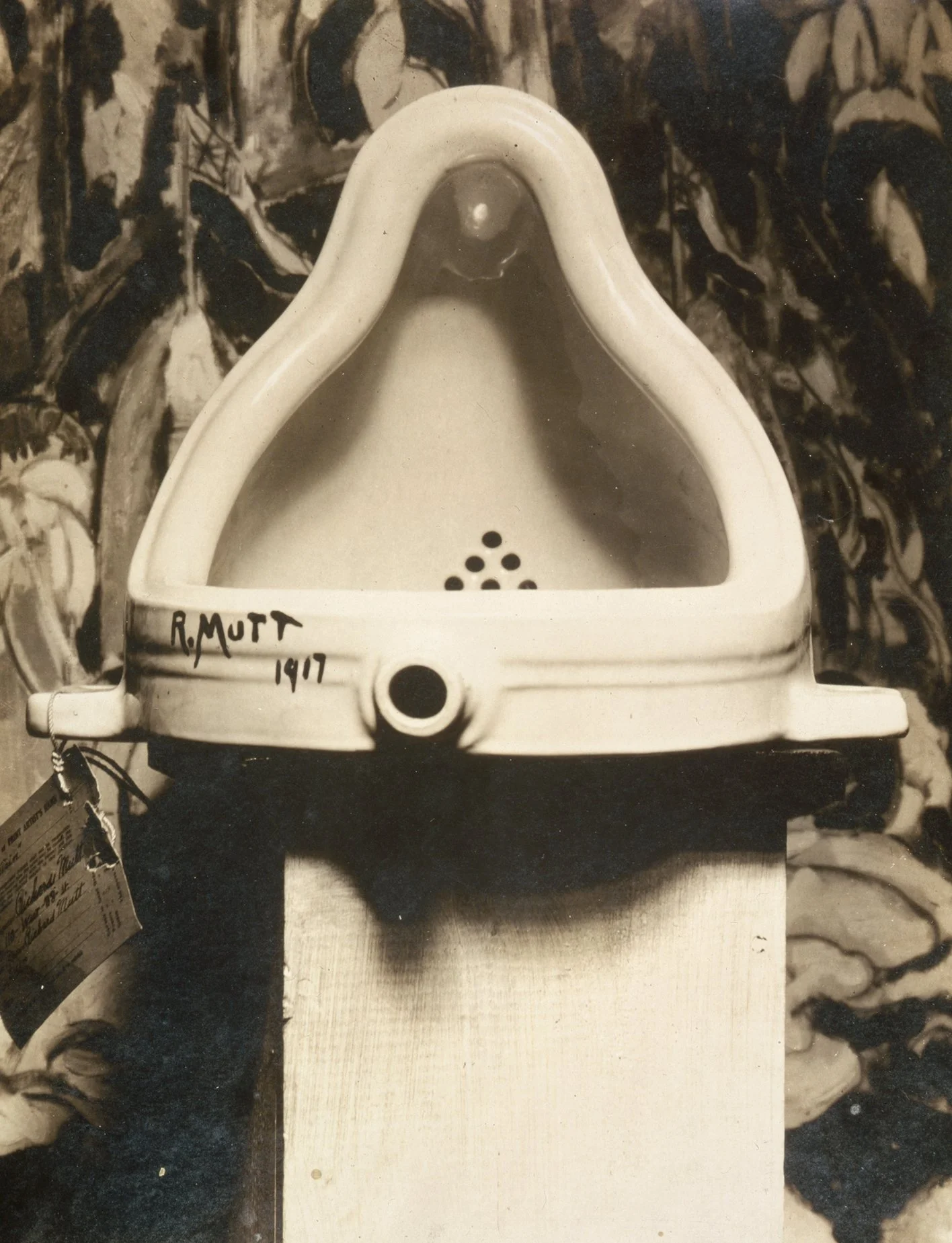
Marcel Duchamp: Fountain c.1917
If you’re searching for an introduction to Dada art, it’s worth starting with a simple question: what happens when artists lose faith in the world around them?
In the early 20th century, a group of creatives answered that question in the most radical way possible. They didn’t try to fix art or improve it. Instead, they set out to dismantle it entirely. The result was Dada.
The Origins of Dada: Art in a Time of War
The Dada movement, active between 1916 and 1924, emerged during the chaos of the World War I. As Europe faced devastation on an unprecedented scale, many artists began to question the systems that had led to such destruction. If logic, reason and culture had brought the world to war, could they really be trusted?
Dada first took shape at the Cabaret Voltaire, an intimate and experimental venue in Zürich. It quickly became a meeting point for artists, poets and performers who wanted to challenge everything society considered “normal”. Figures such as Hugo Ball, Jean Arp, Marcel Duchamp and Kurt Schwitters were central to its development.
Even the name “Dada” reflects the spirit of the movement. It was reportedly chosen at random, possibly by stabbing a dictionary and landing on the word. It means nothing, and that was exactly the intention.
What Defines Dada Art?
Dada art deliberately rejects the traditional expectations of what art should be. At a time when audiences were used to technical skill, polished compositions and clear meaning, Dada artists offered something entirely different. Their work was often absurd, unpredictable and, at times, deliberately irritating.
This wasn’t carelessness. It was a conscious decision to mirror a world that no longer made sense. If society itself felt irrational, then art, in their view, should reflect that same chaos rather than pretend everything was orderly and refined.
Marcel Duchamp and Fountain
One of the most famous examples of Dada is Fountain by Marcel Duchamp. The piece is, quite literally, a urinal. Duchamp placed it on its side, signed it with a pseudonym and submitted it as an artwork in 1917.
The reaction was immediate and intense. Critics and audiences alike were confused and often outraged. This was not what art was supposed to look like.
But that discomfort was the point. Duchamp was challenging the very definition of art, suggesting that it is not about the object itself, but the idea behind it. If an artist selects something and presents it within a gallery context, does that make it art? It’s a question that still shapes contemporary art today.
Performance, Absurdity and Chaos
Dada was not confined to objects on a gallery wall. It was just as much about performance and experience. At events in Zürich and across Europe, artists staged unpredictable and often chaotic performances.
Audiences might encounter nonsensical poetry, exaggerated costumes or vocal performances that replaced words with pure sound. What might begin as a quiet evening in a gallery could quickly become something far more unsettling and disorienting. That clash between expectation and reality was central to the movement’s impact.
Anti-Art That Changed Art Forever
Dada positioned itself as “anti-art”, rejecting long-standing ideas about beauty, technique and meaning. Yet, in doing so, it opened up entirely new possibilities.
Its influence can be seen across much of modern and contemporary art. The idea that art can be driven by concept rather than craftsmanship owes a great deal to Dada. From performance art to installation work, many of today’s most recognisable artistic approaches can be traced back to this moment of rebellion.
From Dada to Surrealism
Despite its lasting influence, Dada itself was relatively short-lived. By the mid-1920s, the movement had largely dissolved. Many of its artists moved on to new creative directions, most notably Surrealism. While Surrealism continued to explore the irrational, it did so in a more structured and psychological way, shifting focus from chaos to the subconscious.
So, Was Dada Genius or a Joke?
Dada still divides opinion today. Some see it as a groundbreaking movement that reshaped the boundaries of art, while others view it as little more than provocation.
In reality, it sits somewhere in between. Dada was born out of frustration and disbelief at a world that had descended into chaos. Its refusal to follow rules was not simply rebellious, it was a reflection of the times in which it emerged.
And perhaps that is why it still feels relevant. When the world stops making sense, art that embraces that confusion can feel not only honest, but necessary.
If you’re curious to explore this idea further, this topic is also unpacked in a recent episode of Pain in the Arts, a podcast exploring the Welsh arts and creative scene. It offers a more conversational take on Dada, its origins, and why it still sparks debate today.
You can listen to the lasted epidote of Pain in The Arts Below: