“What Are the Stories We’re Still Not Seeing?” asks Iris Festival Founder
As Iris Prize celebrates 20 years, founder Berwyn Rowlands reflects on filmmaking, resilience and the future of LGBTQ+ storytelling
Ahead of the 20th anniversary Iris Prize LGBTQ+ Film Festival, Pain in the Arts hosts Chris J Birch and Jak Rhys Birch sat down with founder Berwyn Rowlands for a wide-ranging conversation that began with audience questions about film and media and ended, as many great conversations do, somewhere between Cardiff burger bars, artificial intelligence and the enduring power of storytelling.
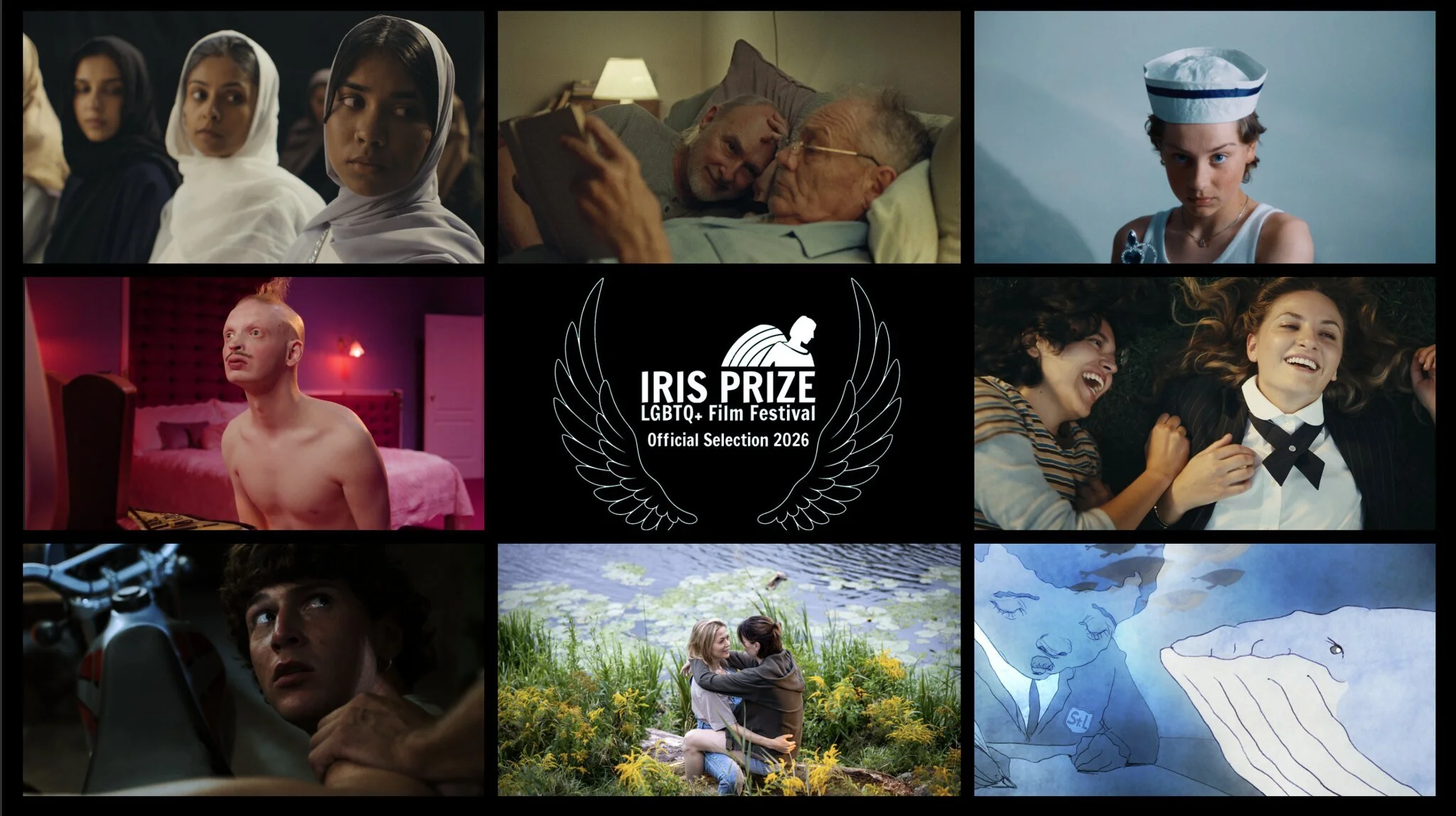
With this year's festival underway and films available online throughout the event, the timing feels particularly apt. Twenty years after launching what would become the world's largest LGBTQ+ short film prize, Rowlands remains as passionate as ever about championing stories that mainstream platforms too often overlook.
And, perhaps surprisingly for someone who has guided a major international festival through economic downturns, changing audiences, funding challenges and a global pandemic, he insists the secret to survival is remarkably simple.
“It’s very difficult not to like Iris somehow”
Twenty Years of Defying the Odds
Keeping any arts organisation alive for two decades is no small achievement. Keeping a film festival alive through recessions, COVID-19 and the ongoing pressures facing the cultural sector is even more remarkable.
Yet Rowlands is quick to downplay suggestions of business genius.
“I think the answer is the fact that it's not a proper business,” he laughs.
There are no shareholders demanding returns and no luxury lifestyles being funded behind the scenes. Instead, Iris has always been built around a collective purpose: supporting filmmakers and creating opportunities for audiences to discover stories they might never otherwise encounter.
For Rowlands, that shared mission has been the festival's greatest strength.
Over the years, countless staff members, freelancers, volunteers and supporters have contributed because they believed in what Iris was trying to achieve. Whether delivering workshops in schools, creating opportunities for underrepresented communities or supporting emerging filmmakers, the work has always felt bigger than the organisation itself.
In difficult times, that sense of purpose matters.
“It's literally about how can we go into schools, how can we do workshops, how can we allow kids who are disadvantaged to understand, enjoy and explore diversity?”
The result is a festival that has developed deep roots not only in Wales but internationally, creating a reputation far beyond Cardiff.
The Best Way Into Film? Get Involved
One of the questions submitted by listeners came from Tom in Anglesey, who wanted to know where somebody with a film idea but no practical experience should begin.
Rowlands' answer was refreshingly direct.
“None of it is easy.”
Rather than offering a romantic vision of artistic success, he encouraged aspiring filmmakers to immerse themselves in creative communities.
Work as a runner. Watch films. Meet writers, producers, actors and directors. Find your role.
Perhaps most importantly, watch short films.
It's advice grounded in a reality many newcomers overlook. While feature films dominate popular discussion, Rowlands argues that short filmmaking is an incredibly demanding art form.
“In eight or twelve minutes you've got to create characters, create relationships and tell a story. You haven't got the luxury of ninety minutes.”
The myth of the solitary genius is one he is keen to challenge.
Film, after all, is inherently collaborative.
“Surround yourself with people who are better than you.”
It's a philosophy that would ultimately shape his own career.
Looking for the Gaps
Throughout the conversation, one theme emerged repeatedly: the importance of identifying stories that are missing.
For Rowlands, Iris has spent two decades providing a platform for narratives that mainstream culture either overlooks or simply fails to notice.
That search for gaps in representation remains central to his thinking.
He recalls filmmakers gathering after a festival screening many years ago, discussing a programme of LGBTQ+ films that focused on ageing.
For some younger creators in attendance, it was the first time they had encountered stories about older queer lives.
Stories about grief. Bereavement. Illness. Growing older.
Stories that existed in reality but rarely appeared on screen.
“They hadn't realised some people get ill. Some people die. How do you deal with grief? Where are those stories?”
The observation remains as relevant today as it was then.
As audiences continue to ask why certain experiences seem absent from television and cinema, opportunities emerge for filmmakers willing to explore unfamiliar territory.
If everybody is already telling one kind of story, perhaps the most exciting question is: what isn't being told?
AI, Creativity and the Future
No contemporary discussion about film feels complete without touching on artificial intelligence.
It's a topic that often divides opinion, particularly among younger creatives concerned about their future career prospects.
Rowlands adopts a pragmatic perspective.
Rather than viewing AI as an existential threat, he sees it as another creative tool.
Referencing comments made by media executive Dawn Airey, he describes AI as an extension of existing technologies rather than a replacement for human creativity.
“If you've got something to say, there is a chance it might help you.”
The key distinction, he argues, lies not in the technology itself but in how it is used.
The conversation drifted briefly towards nuclear power, Hiroshima and Oppenheimer before eventually finding its way back to filmmaking, but the wider point remained clear.
Technology can amplify creativity.
It cannot replace the need for a compelling story.
Whether generated with sophisticated software or written in a notebook, audiences still care about characters, emotion and truth.
“What’s the story?” Rowlands asks. “What's the point of attack?”
The question remains unchanged regardless of the tools available.
What Makes a Great Short Film?
Another listener, Moira from Mumbles, posed a question likely to resonate with filmmakers everywhere.
What makes a short film stand out when festivals receive thousands of submissions?
Again, Rowlands resisted offering a formula.
Instead, he described a feeling.
For him, the best films are the ones that absorb viewers so completely they lose track of time.
You become immersed in a character's world.
The film ends.
And somehow it feels both complete and unfinished.
You have enough, yet you want more.
As an example, he points to Burger, one of the standout productions funded through the Iris Prize.
Set over a brief period in a Cardiff burger bar late at night, the film captures fragments of different lives unfolding simultaneously.
It is, in many ways, deceptively simple.
Yet that simplicity creates space for audiences to connect emotionally.
“I desperately want other people to see it.”
That reaction, ultimately, may be the closest thing any festival programmer comes to a reliable test.
Talent Isn't Enough
One of the most thoughtful audience questions came from Jack in Caerphilly, who asked whether talent alone is enough to build a career in film.
Rowlands' answer was honest.
No.
Talent helps. Great talent helps even more.
But resilience matters just as much.
He points to actors in particular, whose careers often involve constant rejection based on factors entirely beyond their control.
Age. Appearance. Voice. Timing.
To survive in the industry requires determination, self-awareness and an ability not to take setbacks personally.
For aspiring creatives, Rowlands suggests maintaining perspective.
Have a strategy.
Be realistic.
Understand your strengths.
And consider the many different ways of contributing to film beyond directing or acting.
His own career offers a powerful example.
For years, he assumed performance might be his future. It wasn't until he recognised that he was far better at producing, organising and bringing talented people together that he found the role he was meant to play.
“The most liberating thing for me was realising what I did well.”
It's advice that feels useful far beyond the world of film.
Cardiff, Community and the Next Twenty Years
As Iris prepares to celebrate its twentieth anniversary, it could easily be forgiven for indulging in nostalgia.
Instead, Rowlands says the festival has deliberately focused on fundamentals.
No extravagant celebrations.
No excessive self-congratulation.
Just a renewed commitment to sharing LGBTQ+ stories with the widest audience possible.
That audience now stretches far beyond festival venues.
Through partnerships with Channel 4 and BBC platforms, films supported by Iris are reaching millions of viewers.
For Rowlands, that visibility represents one of the festival's most significant achievements.
But when asked what the future might hold, he turns the question around.
The next twenty years will not be determined solely by the festival's leadership team.
They will be determined by audiences.
By filmmakers.
By communities who continue to find value in what Iris offers.
“While we're needed and while we have a role, we will do absolutely everything to be the best.”
That philosophy perhaps explains why Iris has endured.
Twenty years ago, there was scepticism about whether Cardiff could become the home of a major international LGBTQ+ film prize.
Today, the idea barely requires defending.
The festival has not only established itself internationally but has become inseparable from the city itself.
As Rowlands puts it, Iris now understands its relationship with Cardiff.
And Cardiff, increasingly, understands its relationship with Iris.
Listen and Watch
Part One of Pain in the Arts with Berwyn Rowlands will be released on 15 October 2026, followed by Part Two on 22 October 2026.
The episodes coincide with the 20th Iris Prize LGBTQ+ Film Festival, giving audiences the chance to hear more from the festival's founder while many of this year's films remain available to watch online through the Iris platform.
Twenty years on, the mission remains surprisingly simple: tell stories that would otherwise go untold. And if Berwyn Rowlands has his way, there are still plenty more stories waiting to be discovered.