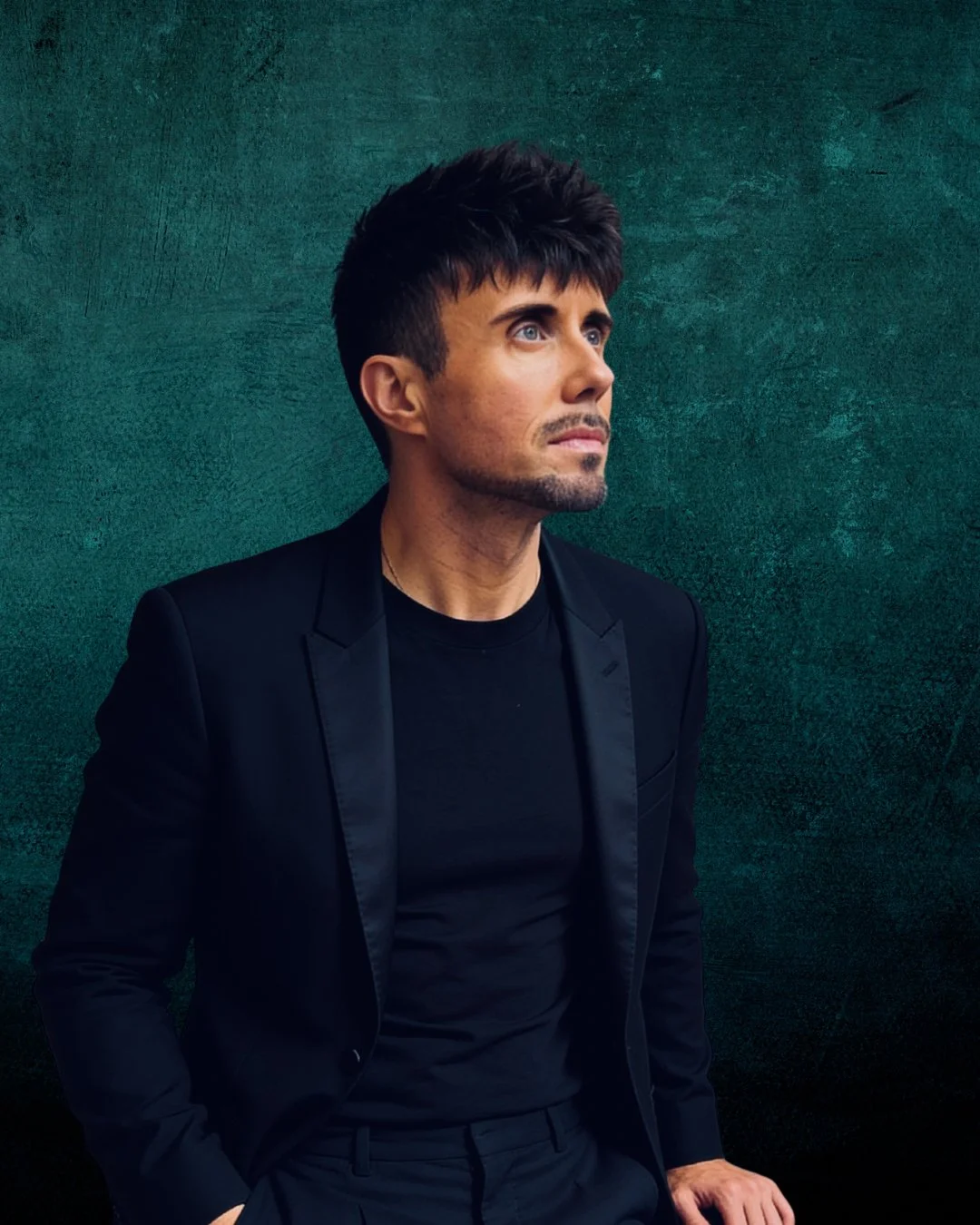
More Than Politics: A Conversation with Heledd Fychan About the Future of Arts and Culture in Wales
For listeners of Pain in the Arts, our recent conversation with Wales' Culture, Media and Sport Minister offered something a little different. Rather than a formal political interview, it became an honest and wide-ranging discussion about creativity, community and what the future of the arts could look like under a government that says it wants culture at the heart of national life.
I've interviewed Heledd Fychan several times over the years, but this occasion felt different.
Partly because it was the first time Jak and I had sat down with her together. Partly because she was now speaking as Wales' Culture, Media and Sport Minister following Plaid Cymru's election victory. But mostly because what unfolded over the next forty minutes felt less like an interview and more like three people who care deeply about arts and culture trying to solve some of the same problems.
The episode was built entirely around questions submitted by listeners of Pain in the Arts. We wanted the conversation to come directly from the people making, supporting and consuming culture in Wales, and in many ways the questions revealed the priorities, anxieties and hopes currently shaping the sector.
What emerged was a conversation about pride, investment, resilience and the belief that culture should not sit on the sidelines of Welsh life.
The Work That Stays With Us
One of the first questions asked what artistic experiences had left the greatest impression on us this year.
For Heledd, the answer came from the National Eisteddfod, specifically an exhibition showcasing Gold Medal winners from across the past three decades. What struck her was not only the quality of the work but the breadth of artistic practice being produced in Wales.
The exhibition, she explained, demonstrated the extraordinary range of talent we have in this country and the many different forms that creativity can take.
For me, the standout production was My Mixed-Up Tape.
Very little in theatre genuinely moves me to tears, but this production managed exactly that. Seeing Katie Payne's work unfold on stage was one of those rare moments when storytelling, performance and emotional honesty align perfectly. Long after the curtain fell, it lingered.
Jak's choice reflected something equally important within the Welsh creative landscape: grassroots creativity. He spoke passionately about a new Newport-based initiative, Art on the Edge, a completely artist-led collective operating without significant funding but bringing together creatives, audiences and musicians in a vibrant celebration of local talent.
It was a reminder that some of the most exciting cultural activity in Wales isn't always happening in our largest institutions.
Sometimes it's happening because determined creatives simply decide to make something happen.
Creativity as Personal Survival
One of the more revealing moments came when we discussed our own creative hobbies.
Despite the pressures of ministerial life, Heledd still makes time to play the piano. She joked that those closest to her can often tell how stressed she is by what she's choosing to play, with Bartók apparently providing a useful outlet for frustration.
Jak immediately related, describing how returning to clay and ceramics allows him to physically release tension.
As for me, my creative outlet remains far less sophisticated.
I doodle.
Endlessly.
My own recent masterpiece, if it can be called that, involved somehow transforming Albert Einstein into a can of Coca-Cola after a glass or two of wine.
The exchange was light-hearted, but it highlighted something important. Creativity isn't simply professional output. It is often how people process stress, make sense of the world and create moments of calm in otherwise demanding lives.
Why Dance Matters
One listener asked about the future of dance in Wales, particularly at a time when parts of the sector have faced significant challenges.
Heledd was clear that dance remains an important part of Wales' cultural ecology and welcomed recent additional investment through Arts Council initiatives. More importantly, she spoke about the need for targeted support that recognises the unique circumstances facing specific sectors.
The conversation sparked a wider discussion about accessibility.
I admitted that contemporary dance had not always been an art form I believed would resonate with me. Yet recent experiences, particularly Blue Glas, had completely changed my perspective.
Jak suggested that greater digital access could help attract new audiences. If recorded performances were made more widely available, people could discover forms of work they might never otherwise encounter.
The discussion returned repeatedly to a theme that would surface throughout the conversation: people often don't know something is for them until they experience it.
Welsh Stories Told Our Way
One of the most striking observations of the afternoon came when we discussed artistic identity.
Heledd referenced productions such as Mari Hwyr, which successfully combine traditional Welsh folklore with contemporary performance practices. For her, these works demonstrate that tradition and innovation are not opposing forces.
They're partners.
Jak built on that thought, arguing that audiences connect most strongly with work when they can see themselves reflected within it.
Whether through language, place, heritage or shared experience, Welsh stories possess enormous power.
The challenge is not whether those stories matter.
It is ensuring that we are the people telling them.
That point resurfaced later when discussing literature, folklore and Wales' influence on international storytelling. Welsh language, mythology and culture have shaped everything from fantasy literature to modern performance, often without receiving visible credit.
Perhaps, we suggested, it's time Wales became more confident in presenting those stories directly to the world.
Consultation, Questions and Ownership
Another significant area of discussion centred on Welsh Government's developing cultural strategy and public consultation process.
For Heledd, success will not be measured by the publication of a document.
Success will be measured by whether people feel they own it.
She spoke passionately about avoiding the creation of yet another strategy that sits unread on a shelf. Instead, the ambition is to develop something shaped collectively by artists, organisations, communities and audiences.
Jak raised an interesting challenge.
Often sectors ask for more funding, but before solutions can be found there must also be a deeper understanding of the underlying issues. Does an organisation need investment because of rising costs? Capacity? Marketing? Infrastructure? Skills? Audiences?
Identifying the root cause matters.
As we discussed, meaningful investment is most powerful when it's directed with purpose.
The Arts, Health and Education
Perhaps the most powerful section of our conversation focused on the relationship between culture, health and education.
The Minister highlighted several successful pilot projects connecting artistic practice with health outcomes, but expressed concern about a familiar problem.
Projects receive temporary funding.
The projects prove successful.
Then the funding disappears.
The cycle repeats.
Instead, she argued, successful programmes should become embedded within systems.
I found myself reflecting on how frequently the arts are treated as a luxury rather than an essential part of public life. Healthcare rightly receives enormous attention and investment, but what happens when people are healthy?
What enriches their lives?
What inspires them?
What connects them?
What helps them flourish?
Art and culture help answer all of those questions.
One particularly compelling argument from Heledd was that society needs to stop viewing creativity merely as something that contributes to wellbeing.
Sometimes it should be recognised as treatment in its own right.
It's a subtle distinction, but an important one.
Wales as a Creative Powerhouse
When asked where Wales' biggest opportunities lie over the next decade, all three of us approached the question differently.
For Heledd, the opportunity lies in ensuring Wales becomes the creative powerhouse it has the potential to be.
For me, much of the excitement currently sits within immersive and digital experiences. Wales is producing genuinely innovative work in this space, and every new project feels unlike anything that came before it.
Jak focused on international reach.
His argument was simple: Wales should think bigger.
If Welsh artists, musicians, performers and organisations are regularly exchanging work internationally, exhibiting globally and building stronger partnerships around the world, then Wales' cultural profile grows alongside them.
It led to one of my favourite moments of the conversation.
Too often, success in theatre is measured by whether work reaches London.
But why stop there?
Why shouldn't Welsh productions be reaching New York, Sydney or Tokyo?
Why shouldn't Welsh artists be operating confidently on global stages?
The ambition felt entirely justified.
Small Actions Matter
Towards the end of the episode, we discussed what listeners could do immediately to support the arts.
Heledd's answer was straightforward.
Buy a ticket.
Visit an exhibition.
Donate if you can.
Support organisations before they're gone.
Jak reminded listeners that support doesn't always require money. Sharing content on social media, recommending work to friends or simply engaging with artists online all contribute to visibility and growth.
My own suggestion was equally simple.
Spend locally when possible.
Buy work from Welsh artists.
Invest in creativity that surrounds you.
Yes, it may cost slightly more than a mass-produced alternative, but the connection, appreciation and impact are immeasurably greater.
Culture survives because people choose to value it.
Looking Forward
As the conversation drew to a close, I asked what legacy Heledd hopes both she and Plaid Cymru will leave for the arts in Wales.
Her answer wasn't framed around grand achievements or political milestones.
Instead, it was surprisingly practical.
She wants the sector to be in a better place when she leaves office than it was when she arrived.
She wants creatives to feel there is a future for them in Wales.
She wants more young people to see the arts as a viable career.
And she wants culture to be recognised as a central part of Welsh life rather than an afterthought.
Whether that vision is achieved remains to be seen.
What struck me most, however, wasn't any individual policy proposal or funding commitment.
It was the tone of the conversation.
There was honesty about the challenges facing the sector. There was realism about the limitations of government. But there was also optimism, and anyone who knows me knows I tend to gravitate towards optimism.
The arts in Wales face significant challenges. Nobody in the room denied that.
Yet for forty minutes, what emerged wasn't a conversation about decline.
It was a conversation about possibility.
And sometimes, particularly in the arts, that's exactly where progress begins.
The full conversation with Heledd Fychan is available across all major podcast platforms as two episodes of Pain in the Arts, as well as on YouTube.