
The Hills That Ring: Listening to Preseli
Playing Bluestone arrives as one of 2026’s most quietly astonishing releases: an album that asks listeners to rethink what music can be, where it comes from, and how deeply sound can be rooted in landscape. Drawn from the Preseli Hills bluestones—the same ancient spotted dolerite carried nearly 300 kilometres to Stonehenge five millennia ago—the record documents a sonic world that has existed far longer than any instrument we recognise today.
A single line from the press release captures the provocation at the heart of the project: “It has long been known that, approximately five thousand years ago, the smaller stones at Stonehenge… were transported to the site from the Preseli Hills in Wales.” That monumental effort has always raised questions. Now, thanks to musician and researcher Mike Adcock, one answer becomes newly audible: these stones ring.
A sonic archaeology
Adcock has spent more than two decades exploring the musical potential of stone, travelling to Vietnam and Indonesia, publishing articles, and culminating last year in his book Music Stones – The Rediscovery of Ringing Rock. His fascination aligns with a growing body of research—led by Jon Wozencroft and Paul Devereux—suggesting that Stonehenge’s bluestones were chosen not only for their durability or symbolism, but for their bell-like resonance when struck.
The album Playing Bluestone, released August 1, 2026 on independent label Archaeological Records, is the first full-length recording dedicated entirely to these Preseli stones. It features eight improvisations performed on fragments collected and later returned to their original hillside locations.
Improvisation as excavation
Adcock describes the sessions as pure exploration. “All the tracks on Playing Bluestone were completely improvised,” he writes. The process echoes his earlier experiments with prepared piano, where curiosity—not performance polish—guided the music. Here, the stones themselves become collaborators: their weight, shape, and internal structure determining what sounds can be coaxed out, what rhythms emerge, and how resonance behaves in different acoustic environments.
Two studios at the University of Gloucestershire provided contrasting sonic landscapes—one large and reverberant, one small and dry—allowing Adcock to treat space as an instrument in its own right. The result is a series of pieces that feel simultaneously ancient and contemporary, ritualistic yet exploratory.
Visual art in dialogue with geology
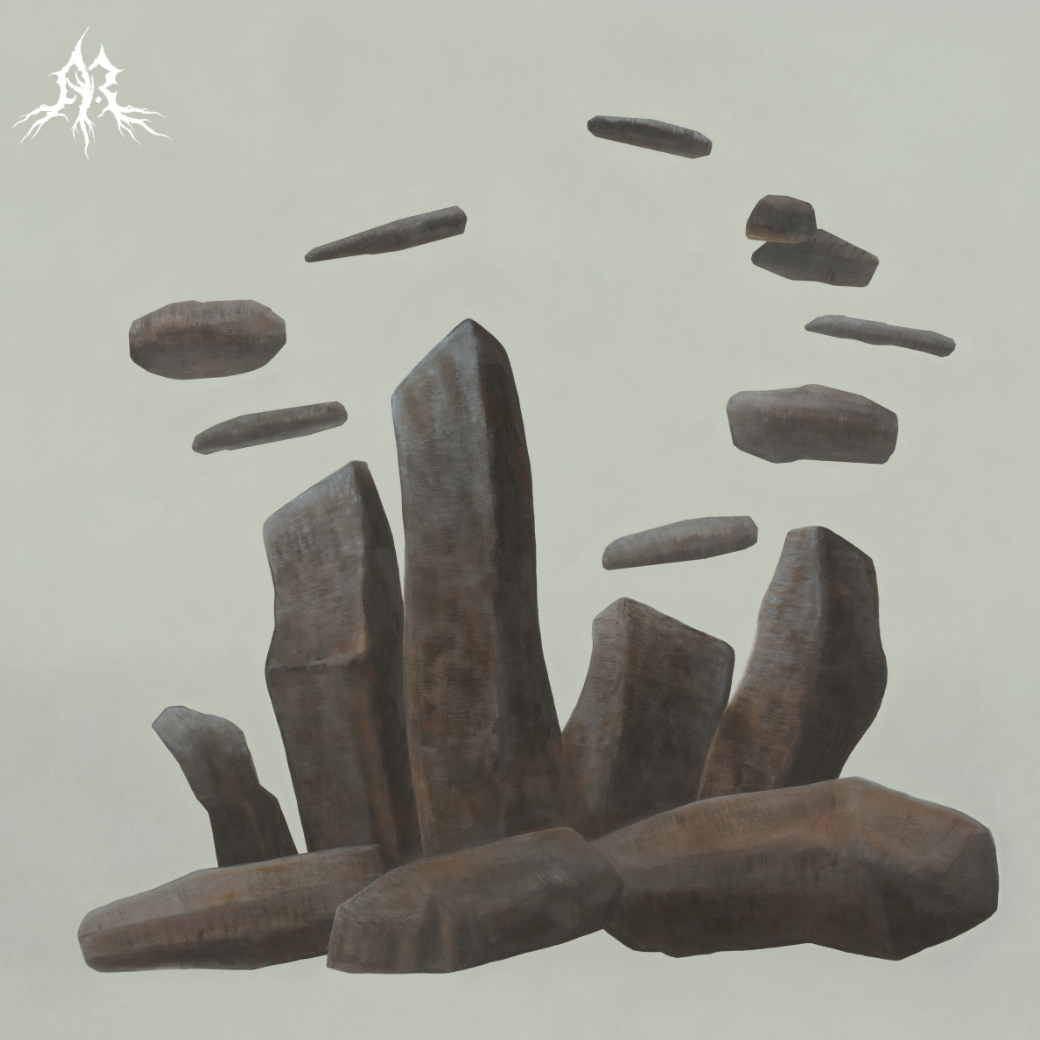
Painter Greg Slick contributes the cover artwork, Preseli Aural Wave, inspired by Adcock’s field photographs and the music’s geological pulse. The vinyl edition—just 10 copies—features a transparent lathe-cut disc by Bladud Flies! and a screen-printed, hand-signed cover, positioning the release as both a listening experience and an art object.
Release details
Release date: August 1, 2026
Formats: digital, CD (100 copies), limited-edition vinyl (10 copies)
Length: 40:43
Label: Archaeological Records
Tracklist: GARRES LAS UN → WYTH (eight movements)
Credits: music by Mike Adcock; production by Adcock & Tony Clancy; mastering by Andrew Liles; design by AR Lab
For listeners, Playing Bluestone offers more than an experimental curiosity. It reconnects sound with place, ritual, and deep time. It challenges the assumption—beautifully articulated by Dame Evelyn Glennie—that stones are “silent, still, and weighty,” reminding us that materials hold music, and that cultures across the world have long known how to listen.
For Wales, it is a rare opportunity to hear the Preseli Hills speak.