How Ancient Greece Shaped the Entertainment We Still Love Today
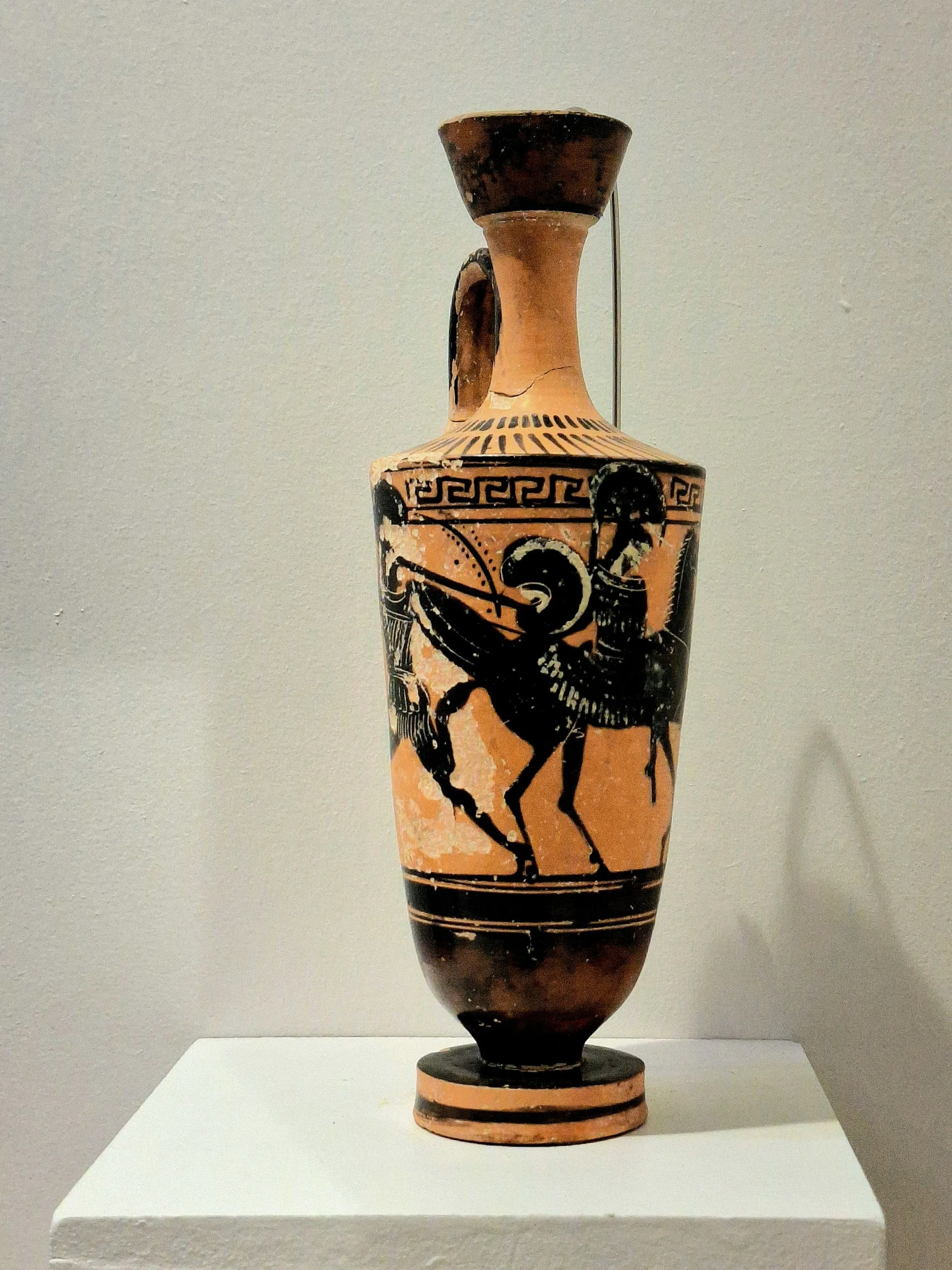
From The Odyssey to the modern stage, the influence of Ancient Greece is everywhere. Thousands of years after these stories were first told, they continue to shape theatre, cinema and the way we tell stories.
After watching the latest cinematic adaptation of The Odyssey, it struck me just how much of today’s entertainment can be traced back to Ancient Greece. It is easy to think of Greek myths as dusty old stories studied in school, but their influence reaches far beyond history books. Every time we visit the theatre, watch a superhero film or follow the journey of a reluctant hero, we are experiencing ideas that first emerged more than 2,500 years ago.
Ancient Greece gave us much more than famous myths. It helped lay the foundations for theatre, storytelling, live performance and even some of the words we still use today. While audiences have swapped open-air amphitheatres for cinemas and streaming services, our love of a compelling story has remained remarkably unchanged.
The man who may never have existed
When people think of Ancient Greek literature, two works usually come to mind: The Iliad and The Odyssey. Both are traditionally credited to Homer, a poet believed to have lived around the eighth century BC.
The fascinating thing is that historians still cannot say with certainty whether Homer was a real individual.
Some scholars believe he was a single poet whose work survived through generations. Others argue that the poems were developed by several storytellers over many years before eventually being written down. This question, known as the “Homeric Question”, has fascinated historians and literary experts for centuries.
Whether Homer was one person or many, the stories themselves have endured.
The Iliad tells the story of the Trojan War, while The Odyssey follows the long and difficult journey of Odysseus as he attempts to return home after the war. Filled with monsters, gods, witches and impossible challenges, it remains one of the greatest adventure stories ever written.
Storytelling before books
Today we take books, films and podcasts for granted, but for much of history stories were something you experienced rather than something you read.
Before these poems were written down, they were performed aloud by travelling storytellers called rhapsodes. These performers travelled between cities, reciting enormous sections of epic poetry entirely from memory.
That is no small achievement.
The Odyssey contains around 12,000 lines, while The Iliad stretches to more than 15,000. Memorising works of this length required remarkable skill.
To help them remember, storytellers relied on repeated phrases known as epithets. You will often hear descriptions such as “swift-footed Achilles”, “grey-eyed Athena” or “rosy-fingered Dawn”. These repeated expressions were not simply decorative language. They acted as memory prompts, helping performers move naturally from one section of the story to the next.
It was a practical storytelling technique that also gave the poems their distinctive rhythm and style.
The birth of theatre
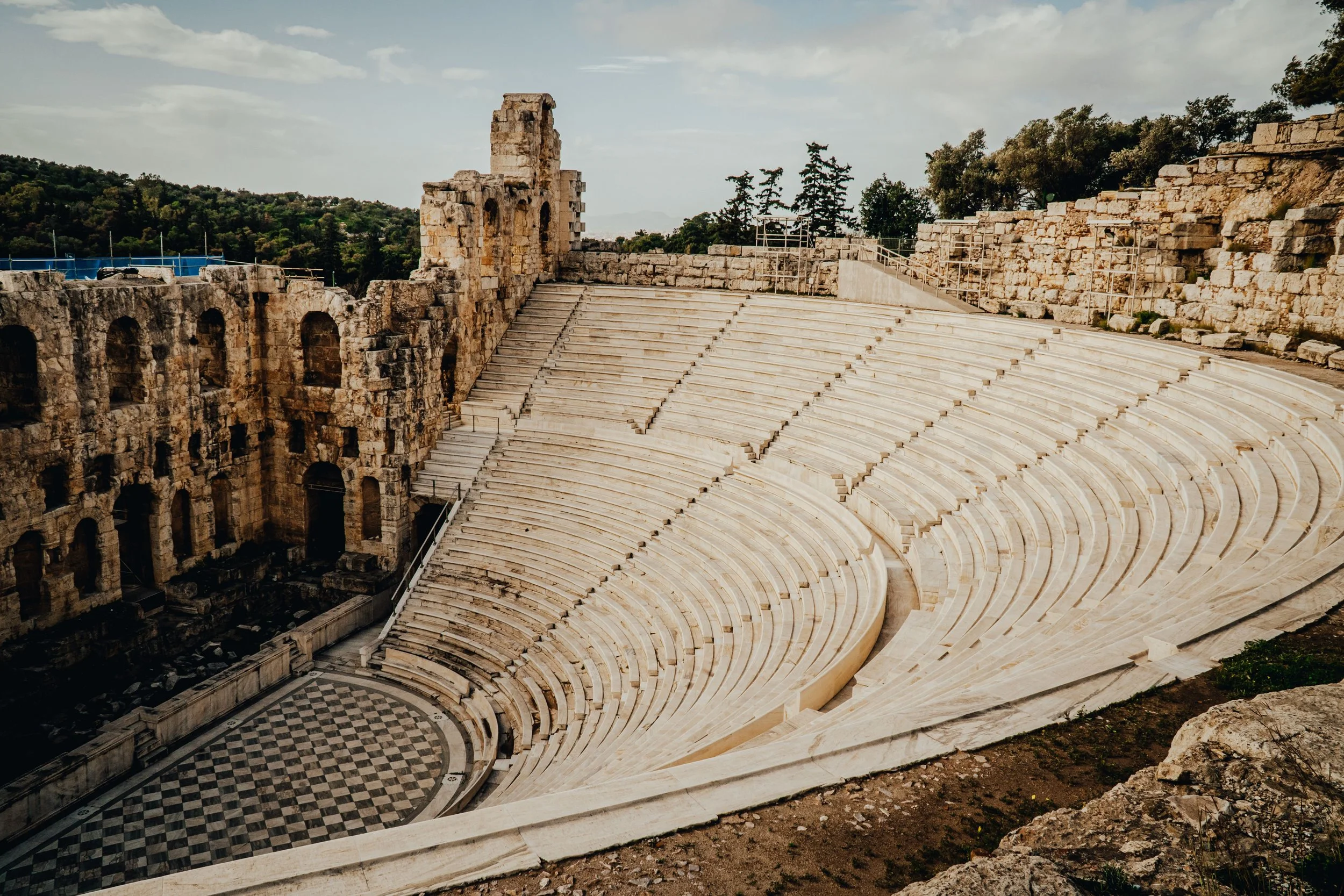
Perhaps Ancient Greece’s greatest gift to the arts was theatre itself.
The word “theatre” comes from the Greek word theatron, meaning “a place for viewing”. While performances had existed in different forms before, the Greeks transformed theatre into a major cultural event that brought entire communities together.
Many performances took place during festivals honouring Dionysus, the Greek god associated with wine, celebration and theatre.
These festivals were far more than entertainment. They were civic occasions attended by thousands of people.
Playwrights competed against one another, presenting a series of plays before judges who would decide the winner. Success brought enormous prestige, making playwrights some of the most celebrated public figures of their time.
In many ways, these festivals resembled today’s film awards or theatre competitions. Writers, actors and producers all wanted their work to be remembered.
The playwrights who changed history
Several Greek playwrights continue to influence theatre today.
Aeschylus is often called the father of tragedy. He introduced the idea of adding a second actor to the stage, allowing dialogue to develop naturally rather than relying on a single performer speaking to the audience.
Sophocles expanded these ideas even further by introducing a third actor and creating more emotionally complex characters. His play Oedipus Rex remains one of the most studied tragedies ever written.
Euripides focused on ordinary human emotions, often questioning traditional ideas about heroes and gods. His characters felt more relatable than many earlier dramatic figures.
Alongside tragedy came comedy.
Aristophanes became famous for writing sharp political satire that mocked public figures, questioned society and encouraged audiences to laugh at the world around them.
More than two thousand years later, modern sitcoms, political satire and dramatic theatre still owe something to these pioneering writers.
The remarkable theatres of Ancient Greece
One of the most impressive achievements of Ancient Greek civilisation can still be visited today.
Large stone theatres were carefully built into hillsides, allowing thousands of spectators to watch performances.Some could seat more than 15,000 people.
Even more astonishing is their acoustic design. Without microphones or speakers, actors performing on stage could often be heard throughout the entire theatre. Architects achieved this through carefully designed seating arrangements, curved structures and an understanding of how sound travels.
Modern engineers continue to study these theatres because many still offer exceptional acoustics after more than two millennia.
It is a reminder that great design does not always rely on modern technology.
Acting behind a mask
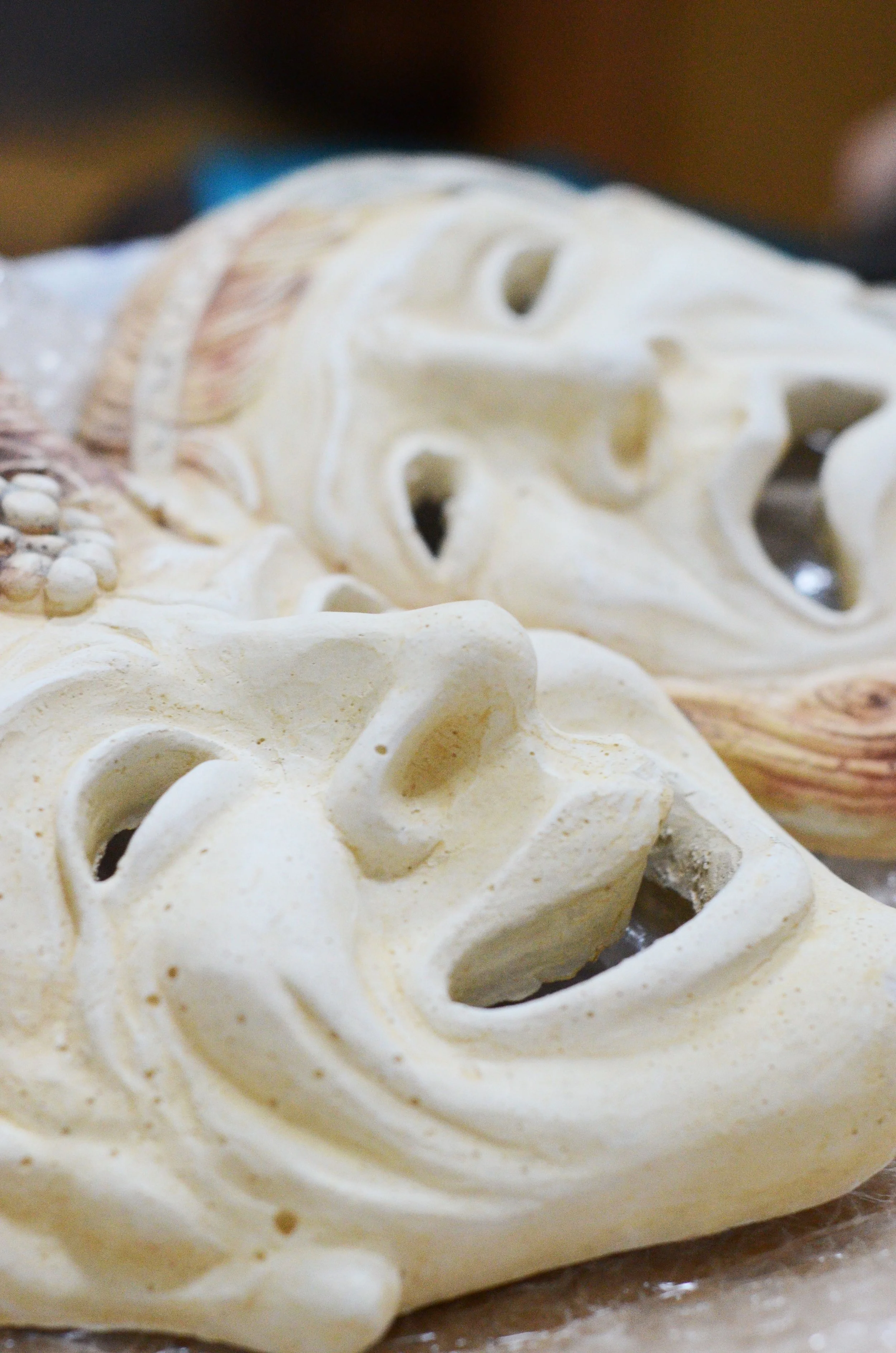
If you picture Ancient Greek theatre, one image probably comes to mind immediately: the mask.
Actors wore large masks featuring exaggerated expressions that represented happiness, sadness, anger or fear. These oversized features made emotions visible to audiences sitting far from the stage.
Masks also served another practical purpose.
With relatively few performers available, actors often played several different characters during the same production. Changing masks allowed them to switch roles quickly.
Women were not permitted to perform in Ancient Greek theatre, meaning all female characters were played by men wearing masks and costumes.
Although this seems unusual today, it reflected the customs of the period.
Competition was part of Greek culture
The Greeks loved competition, the Olympic Games are perhaps the best-known example, but artistic competitions were just as important. Poets, Musicians and Playwrights all competed.
Winning these contests brought recognition throughout the Greek world. Artists gained reputations that spread from city to city, much like celebrated directors, actors or musicians do today.
This competitive spirit encouraged innovation and pushed writers to experiment with new ideas that still influence storytelling.
The hero’s journey
One reason The Odyssey continues to resonate with modern audiences is because it follows a storytelling pattern that still appears in books, films and television.
The central character leaves home, faces challenges, learns difficult lessons and eventually returns transformed by the experience.
This structure became known as the hero’s journey, a concept explored extensively by mythologist Joseph Campbell in the twentieth century. Campbell identified common patterns shared by myths from cultures around the world, with The Odyssey standing as one of the clearest examples.
Countless modern stories follow the same pattern.Luke Skywalker leaves his ordinary life to become a Jedi. Harry Potter discovers a hidden magical world before confronting great evil. Frodo Baggins undertakes an impossible journey that changes him forever.Even many superhero origin stories follow the same narrative structure first seen in Ancient Greek mythology.
The details may differ, but the emotional journey remains familiar.
Greek words we still use today
Ancient Greece also shaped our everyday language.
The word “academy” comes from the Academy founded by the philosopher Plato outside Athens.
“Theatre” comes from theatron.
“Drama” comes from the Greek word meaning “action”.
Even the word “epic” originally referred to long narrative poems like The Iliad and The Odyssey before becoming shorthand for anything impressive or exciting. These words have survived for thousands of years because the ideas behind them remain relevant.
Why these stories still matter
It is remarkable that tales first performed before written books became common are still inspiring filmmakers, playwrights and novelists today.
Recent adaptations of The Odyssey show that audiences continue to connect with Odysseus’ journey. The challenges he faces may involve mythical creatures rather than modern problems, but the emotions are timeless.
His determination to return home, his struggle against impossible odds and, the hope that his loved ones are still waiting.
These themes continue to resonate because they reflect universal human experiences. Technology has transformed how we experience stories, but it has not changed why stories matter.
Whether we gather around a campfire, sit in an ancient amphitheatre or settle into a cinema seat with a bucket of popcorn, we are still looking for the same thing.We want stories that make us laugh, think and imagine. Ancient Greece may not have invented entertainment in every sense, but it undoubtedly shaped many of the traditions that define it today.
The next time you watch a film inspired by Greek mythology, attend a play or lose yourself in the journey of an unlikely hero, remember that you are taking part in a tradition that stretches back more than two and a half thousand years.
Some stories really are timeless.
To Listen to the Podcast Episode where I talk Greek Art click here.