Physical Education Review: A Raw and Unflinching Examination of Modern Masculinity at Swansea Grand Theatre
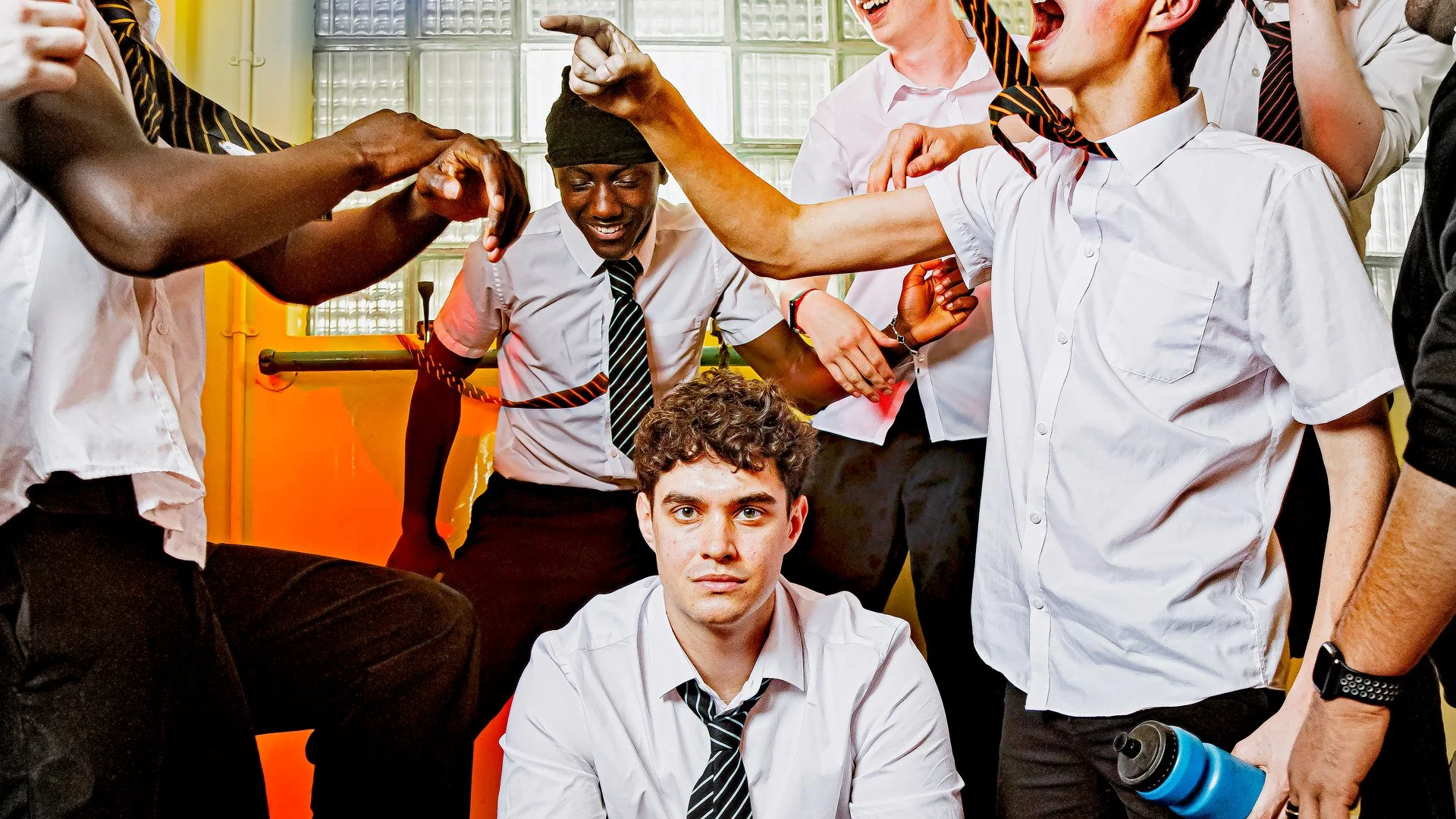
There are few productions that capture the reality of adolescence with such honesty that they become almost uncomfortable to watch. Physical Education, written by Jonathan Houlston, directed by Richard Mylan and produced by Grand Ambition, is one of those plays. Staged at Swansea Grand Theatre, this powerful new drama strips away bravado to expose the complicated, often painful reality of growing up as a young man.
Set entirely within the confines of a comprehensive school changing room, Physical Education is a deeply affecting exploration of masculinity, friendship, sexuality and mental health. It confronts the culture of the school locker room head-on, revealing the invisible pressures placed upon teenage boys to conform to outdated ideas of what it means to be 'a man'.
The changing room becomes far more than a backdrop. It is a battleground where friendships are forged and broken, identities are questioned, insecurities are buried beneath banter, and vulnerability is too often met with ridicule. It is a space that, for many men, represents an unspoken chapter of adolescence, rarely explored with such honesty especially on stage.
Houlston's script contains offensive and homophobic language throughout. However, this is never employed for shock value or cheap laughs. Instead, it serves a vital dramatic purpose, reflecting the everyday reality experienced by many young men navigating school life. The language illustrates how casual prejudice, peer pressure and toxic masculinity become deeply ingrained, often without those perpetuating it recognising the lasting damage they inflict.
What makes Physical Education particularly compelling is its refusal to offer simplistic answers. Rather than presenting heroes and villains, Houlston examines how cycles of behaviour are inherited and repeated. Some characters challenge the expectations placed upon them, daring to imagine lives beyond the narrow definitions of masculinity they've inherited. Others appear trapped, destined to follow familiar paths, remaining in the same towns, becoming versions of their fathers, and unknowingly continuing the cycle for another generation.
It is this complexity that gives the play its emotional weight. Every character feels authentic because the production is so clearly rooted in lived experience. Nothing feels manufactured or exaggerated. The humour lands naturally, often providing welcome relief before moments of genuine heartbreak. The audience laughs together one moment before sitting in stunned silence the next as the emotional consequences of seemingly harmless banter unfold.
“Beneath the laddish humour, crude insults and relentless posturing are young people desperately searching for acceptance, friendship and permission to be themselves.”
Richard Mylan's assured direction keeps the action intimate and relentlessly tense, making the audience feel like silent witnesses behind the changing room door. Every interaction feels immediate and authentic, allowing the emotional intensity to build naturally without ever becoming melodramatic. There is nowhere for either the characters or the audience to hide from the uncomfortable truths unfolding on stage, and that is precisely the production's greatest strength.
At its heart, Physical Education is about far more than school life. It is about identity, belonging, fear, vulnerability and the desperate need to fit in. It explores how emotional repression and performative masculinity continue to shape generations of young men, often with devastating consequences for their mental health.
The success of Physical Education ultimately rests on the strength of its ensemble, and every member of the cast delivers a performance that feels authentic, nuanced and emotionally truthful. Rather than relying on stereotypes, each actor reveals the humanity beneath the bravado, allowing Jonathan Houlston's exploration of masculinity to resonate with genuine emotional weight.
As Holly, Anna-Sophia Tutton provides an essential outside perspective. As Joe's girlfriend, Holly exists beyond the performative masculinity that dominates the changing room, becoming one of the few characters willing to challenge the boys' behaviour rather than accept it as normal. Tutton brings warmth, honesty and quiet resilience to the role, serving as a reminder that these damaging attitudes are learned, not inevitable.
Ethan Thomas is wonderfully entertaining as Max, whose quick wit and relentless humour make him the group's comic relief. Yet Thomas cleverly allows cracks to appear beneath the class clown persona, revealing a young man who uses laughter as both a defence mechanism and a means of survival while enduring Jason's constant humiliation. It is a performance that balances comedy with genuine pathos.
Harry Lynn commands the stage as Jason, the self-appointed leader of the group. Aggressive, intimidating and determined to project strength at every opportunity, Jason appears to embody everything expected of traditional masculinity. However, Lynn carefully peels back those layers to expose the frightened, vulnerable teenager shaped by his life away from school. His performance never asks for sympathy, but it does ask for understanding, making Jason one of the production's most complex characters.
“Raw, powerful and impossible to ignore”
Jude Blake brings sensitivity and quiet confidence to Sam, whose relationship with Ryan introduces an entirely different vision of masculinity. Rather than confronting the group's toxic culture head-on, Sam simply exists outside of it, offering Ryan the possibility that affection, openness and vulnerability between men are not weaknesses but strengths. Blake's understated performance becomes one of the production's emotional anchors.
Jonathan Houlston also delivers a compelling performance as Joe. Initially swept along by the same bravado and peer pressure as his friends, Joe gradually begins to question the behaviours he has accepted for so long. Houlston charts that emotional evolution with subtlety, making Joe feel like the character most capable of breaking the cycle and influencing those around him.
Luke Rhodri gives Ryan one of the evening's most emotionally affecting arcs. As Ryan comes to terms with his sexuality through his relationship with Sam, he must confront the fear that embracing his true identity may cost him the friendships that have defined his life. Rhodri captures that conflict beautifully, portraying a young man caught between loyalty to his past and hope for a more authentic future.
Completing the cast is Michelle McTernan as Miss Rider, the school's sports teacher and, in many ways, the play's moral compass. McTernan portrays her with compassion and quiet authority, recognising that the behaviour unfolding before her is not unique but part of a cycle repeated across generations. It is this awareness that gives her performance its poignancy; her greatest frustration is not simply what she witnesses, but the knowledge that despite every effort, these patterns of toxic masculinity continue to persist.
What makes these performances so compelling is the chemistry between the ensemble. Every friendship, confrontation and moment of vulnerability feels entirely believable, creating a production that never feels like a social lecture but instead an honest portrait of adolescence. Together, the cast ensure Physical Education is as emotionally gripping as it is thought-provoking, leaving audiences reflecting on its themes long after the final curtain.
What lingers long after the curtain falls is not simply the play's difficult moments, but its humanity. Beneath the laddish humour, crude insults and relentless posturing are young people desperately searching for acceptance, friendship and permission to be themselves.
Grand Ambition has produced a work that feels urgent, relevant and profoundly important. Physical Education is fearless in its storytelling, compassionate in its characterisation and unflinchingly honest in its portrayal of teenage life. It refuses to sanitise its subject matter, and it is all the more powerful because of it.
This is theatre that starts conversations long after the audience leaves the theatre. It shines a light on issues that remain deeply embedded in our schools and wider society, reminding us that changing the conversation around masculinity begins by listening to the experiences of those living it.
Rating: ★★★★★ (5/5)
Physical Education is an exceptional piece of contemporary Welsh theatre. Jonathan Houlston has written a script that is funny, heartbreaking and disarmingly authentic, while Richard Mylan's direction ensures every moment lands with emotional precision. Supported by Grand Ambition's commitment to telling bold, socially relevant stories, this is a production that deserves to be seen by audiences far beyond Swansea. It is an essential examination of modern masculinity that feels both timely and timeless, proving that some of the most important stories are those told with honesty, courage and compassion.