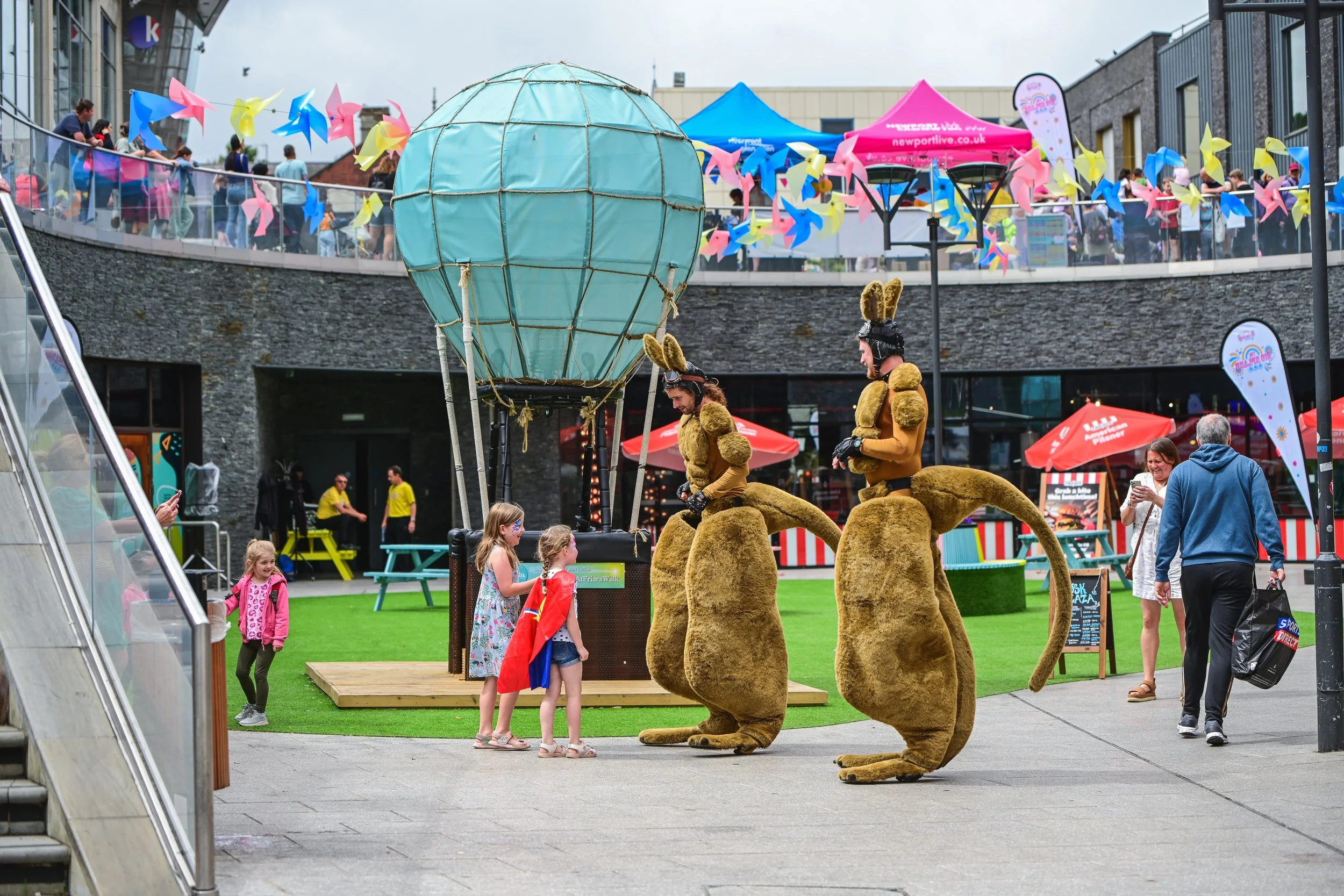
For many in Newport, summer simply wouldn’t feel complete without Big Splash. The much-loved festival, held at The Riverfront Theatre and Arts Centre, has long been a cornerstone of the city’s cultural life—bringing colour, creativity and over 20,000 visitors together each year for what is widely recognised as the largest free outdoor arts festival in Wales.
But as preparations turn towards 2026, the future of the event is facing a familiar and increasingly pressing challenge: funding.
A setback—but not the end
Newport Live has confirmed that its recent application to Arts Council of Wales for support towards the 2026 festival was unsuccessful, following what has been described as a highly competitive process.
While disappointing, the decision relates specifically to 2026 event—not the long-term future of Big Splash. Newport Live has been clear in its commitment to the festival, with teams already exploring alternative funding routes and delivery models in a bid to keep it alive.
Behind the scenes, work is ongoing to deliver some form of Big Splash in 2026, with further updates expected in the coming months.
The bigger picture for the arts
This news, however, taps into a much wider conversation about the sustainability of arts and cultural events—not just in Newport, but across Wales and the UK.
Funding bodies like the Arts Council play a vital role in supporting creativity, but their resources are finite. With increasing demand and limited pots of money, difficult decisions are inevitable. That raises an important question: should the responsibility for funding vital community events rest so heavily on one source?
Festivals like Big Splash aren’t just about entertainment. They provide free access to the arts, support local artists, boost the local economy and create shared experiences that strengthen communities. For many families, particularly during a cost-of-living crisis, events like this offer rare opportunities to engage with culture without financial barriers.
Who else should step in?
There’s a growing argument that a broader coalition of support is needed to sustain events of this scale and importance.
Local authorities, for instance, have a clear stake in the cultural and economic benefits these festivals bring. Increased footfall, tourism, and community engagement all contribute to the wider wellbeing of a city. In challenging financial times, councils face their own pressures—but does that make cultural investment less essential, or more so?
Equally, partnerships with local businesses, regional sponsors, and even community-backed funding initiatives could help bridge the gap. If Big Splash is as valued as attendance figures suggest, then its future may depend on a shared sense of ownership beyond traditional funding routes.
A festival worth fighting for
What’s clear is that Big Splash matters—to Newport, to artists, and to audiences who return year after year.
Newport Live’s determination to continue the festival, despite this setback, speaks to its importance. But it also highlights the fragile reality facing many arts organisations today: passion and commitment alone are rarely enough without sustainable financial backing.
As conversations around funding continue, one thing remains certain—events like Big Splash don’t just happen. They’re built, supported and sustained by those who believe in their value.
And perhaps now is the moment to ask who else might step forward to ensure they continue.