After Agincourt Review: Gareth David Lloyd Delivers a Gripping Tale of War, Brotherhood and Brutality
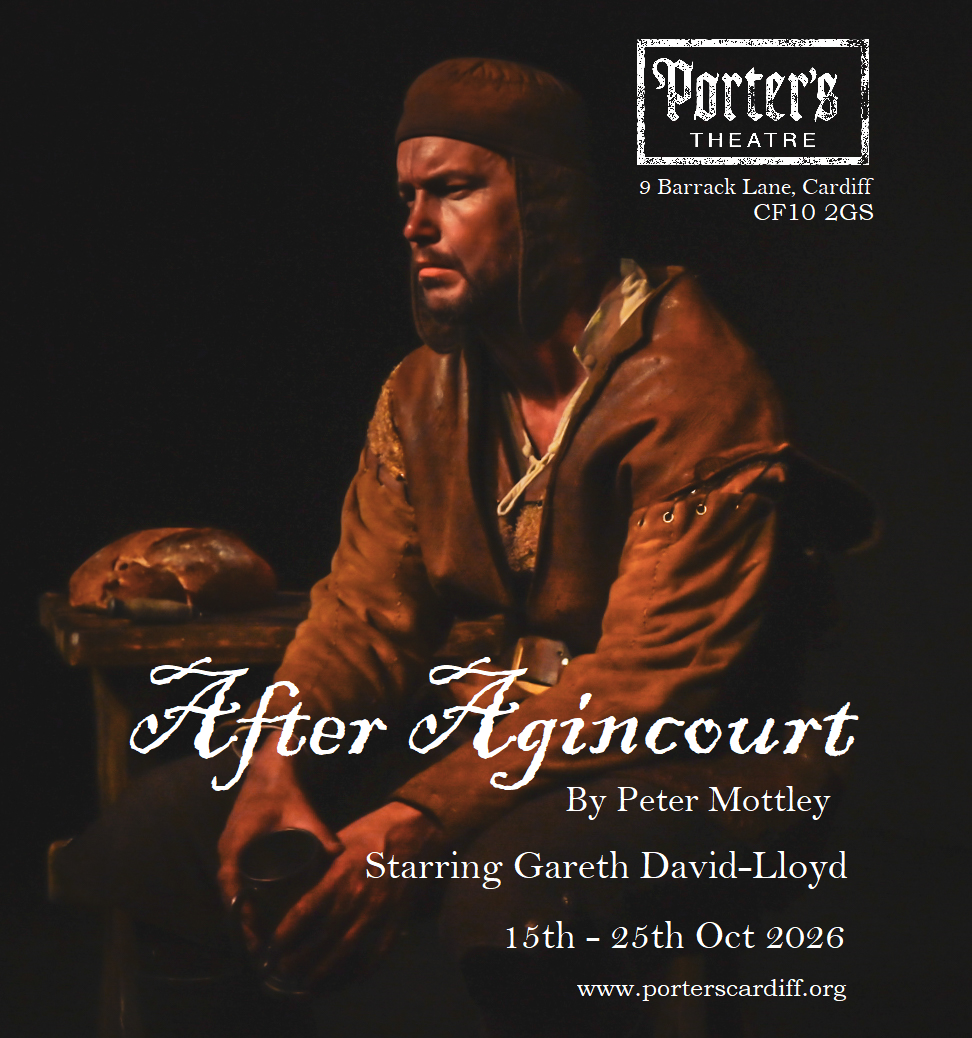
Bringing history to life is one thing. Making an audience feel the weight of its horrors is another. With After Agincourt, Torchwood’s Gareth David Lloyd delivers a powerful one-man performance that takes audiences beyond the familiar stories of English victory and into the grim reality of the soldiers who fought, suffered and died along the way.
Following a successful mini tour of London and an acclaimed run at Brighton Fringe, Peter Mottley’s historical drama arrived in Cardiff, inviting audiences into the Boars Head Tavern to meet Shakespeare’s braggart soldier Pistol. Drunk, troubled and haunted by his past, Pistol recounts the events of the 1415 English invasion of France, offering a perspective on the campaign that is far removed from the heroic narratives we have come to expect.
Lloyd is captivating from the outset. His portrayal of Pistol moves effortlessly between boisterous humour, drunken bravado and moments of devastating vulnerability. There is laughter in the tavern, but it never feels far removed from the despair beneath the surface. As the stories unfold, the character’s bluster gives way to the memories of violence, loss and suffering that continue to haunt him.
The play draws on Shakespeare’s Henry V as a framework, but shifts the focus away from kings and grand declarations of victory towards the ordinary men caught up in the machinery of war. Through Pistol’s recollections, Mottley exposes the brutality of bloody battles, the misery of endless sieges and the human cost of a campaign often celebrated as a triumph.
“60 minutes. One Actor. An extraordinary journey from laughter to despair and fury. Unrelenting, gripping theatre.”
What makes After Agincourt particularly compelling is its exploration of class, brotherhood and what we would now recognise as post-traumatic stress disorder. These are men expected to fight, obey and endure, with little consideration for the psychological scars they carry home. The play’s modern vernacular makes their experiences immediate and accessible, while its meticulous historical research gives the narrative an added weight. This is not history polished for national pride; it is history with the uncomfortable details left intact.
Lloyd’s performance is the beating heart of the production. Carrying the entire story alone, he commands attention without needing spectacle. His ability to shift between comic storytelling and raw emotional intensity keeps the audience engaged throughout, gradually drawing us deeper into Pistol’s world. The humour is essential, providing moments of relief while making the darker turns all the more affecting.
Originally performed by Bob Hoskins on BBC Radio 3, After Agincourt demonstrates the enduring power of Mottley’s writing. Its intimate storytelling reminds us that history is not simply a collection of dates, battles and celebrated figures. It is made up of individual lives, complicated loyalties and people left to live with the consequences of decisions made far above their station.
Sixty minutes might seem a short time in which to explore the realities of war, but this production makes every moment count. It is funny, uncomfortable, moving and, at times, genuinely infuriating. Most importantly, it challenges the audience to look beyond the familiar mythology and consider the people whose suffering is so often relegated to the margins.
After Agincourt is an extraordinary piece of storytelling, brought to life by an actor who understands precisely when to make us laugh and when to leave us sitting with the silence.