Film, Festivals and the Stories We Still Need to Tell: Pain in the Arts Welcomes Berwyn Rowlands
There are some people in the Welsh cultural sector whose influence reaches much further than their job title suggests. Berwyn Rowlands, founder and CEO of the internationally renowned Iris Prize, is undoubtedly one of them.
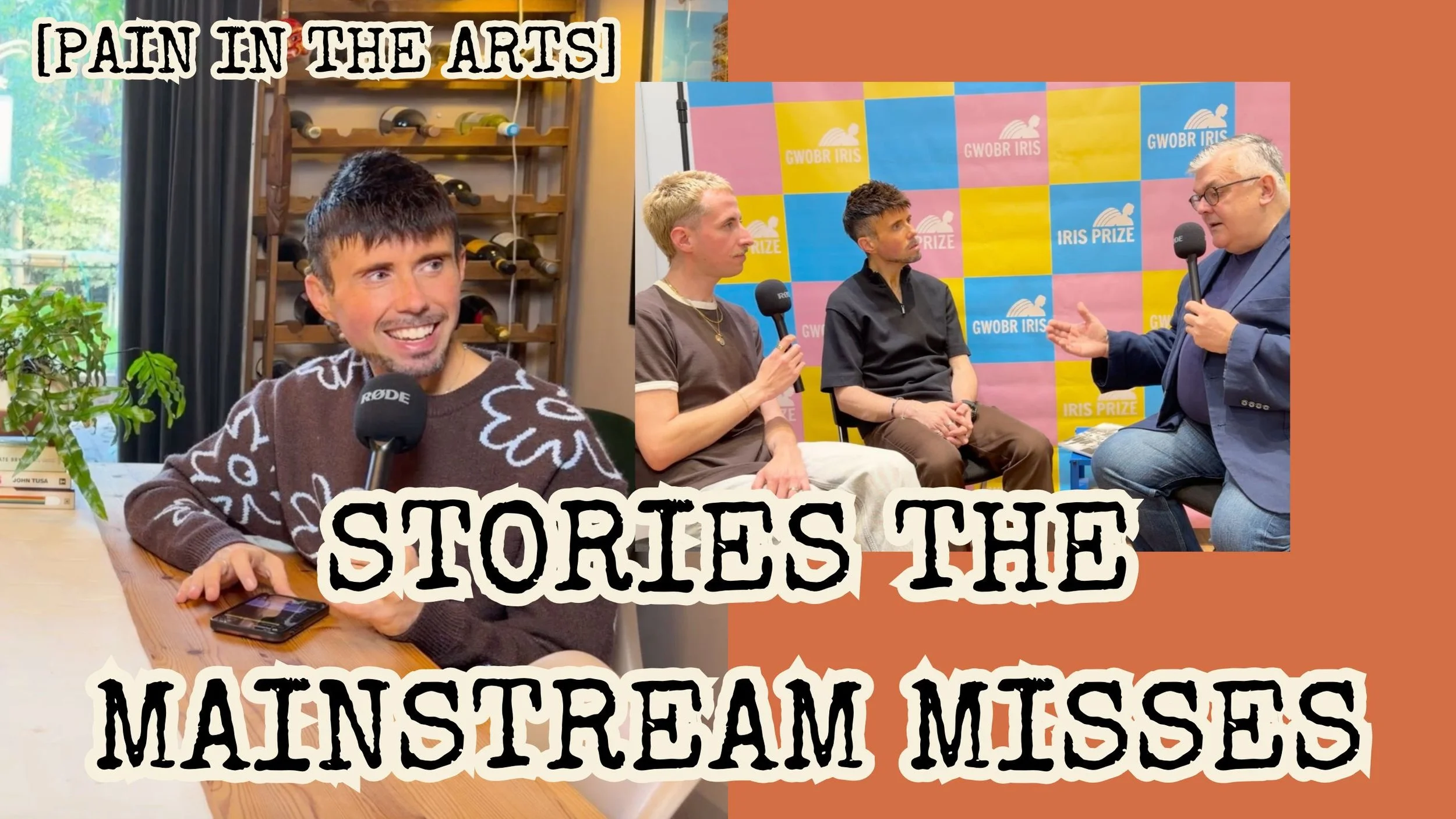
The latest episode of Pain in the Arts sees hosts Chris J Birch and Jak Rhys Birch sit down with Rowlands for a fascinating, funny and unexpectedly candid conversation about film, storytelling, creative careers and what it takes to keep one of Wales' most celebrated cultural festivals alive for two decades.
Recorded during the 20th anniversary celebrations of the Iris Prize Festival, the episode offers a rare glimpse behind the curtain of a festival that has helped launch filmmakers onto international stages while firmly establishing Cardiff as a global destination for LGBTQ+ storytelling.
Twenty Years of Iris
When Iris Prize launched in Cardiff twenty years ago, the idea was ambitious.
A film prize dedicated to LGBTQ+ storytelling, based in Wales rather than London, competing for global attention in an already crowded landscape.
Two decades later, Iris has become one of the world's leading LGBTQ+ short film festivals, attracting filmmakers from across the globe while maintaining deep roots in Welsh culture and creative life.
Speaking on the podcast, Rowlands reflects on the challenge of sustaining a festival through recessions, funding pressures, changing audience habits, a global pandemic and the ever-changing landscape of film distribution.
His answer is unexpectedly simple.
People believe in it.
The conversation highlights the countless volunteers, filmmakers, supporters, funders and audience members who have helped build Iris into something much larger than a film festival. It has become a platform, a community and a launchpad for emerging talent.
How Do You Break Into Film?
One of the episode's listener questions asks a deceptively straightforward question: what should someone do if they have an idea for a film but no experience making one?
Rowlands' answer cuts through any romantic notion of overnight success.
Watch films. Work with other creatives. Learn from people already making work. Understand where your strengths genuinely lie.
It is a refreshingly honest perspective in a world where social media often presents creative careers as quick routes to recognition.
Instead, the conversation focuses on collaboration, patience and the importance of finding your place within the wider filmmaking ecosystem. For some that may be directing. For others it may be writing, producing, editing or supporting productions behind the scenes.
It's practical advice, grounded in decades of experience helping new voices find their audience.
The Stories That Aren't Being Told
Perhaps the most compelling part of the discussion centres on storytelling itself.
Rowlands argues that some of the most exciting creative opportunities emerge when artists focus not on what audiences are already seeing, but on what is missing.
What stories are absent?
Whose voices remain unheard?
What experiences are still overlooked by mainstream media?
This philosophy has shaped Iris from the beginning, creating space for narratives that might otherwise struggle to find a platform. It is a theme that resonates strongly throughout the episode and one that feels particularly relevant at a time when audiences are increasingly searching for authenticity and representation.
For creatives looking for their next idea, it may well be the most valuable advice in the entire conversation.
Film, AI and Creative Technology
The discussion also ventures into emerging technologies, including artificial intelligence and its growing role within creative industries.
Rather than approaching AI as something to fear, Rowlands describes it as another creative tool, not unlike special effects or digital editing technologies before it.
The conversation acknowledges the concerns many artists have while also recognising that technology itself is rarely the problem. The real question is how it is used.
It's a nuanced discussion that avoids both panic and blind optimism, offering a perspective that many creatives will find refreshing.
A Wider Conversation About Culture
As with all episodes of Pain in the Arts, the interview doesn't exist in isolation.
Chris and Jak also reflect on a busy week of theatre reviews, cultural events and creative conversations across Wales. Topics range from the challenges of covering arts activity across the entire country to the impact of social media on audience behaviour and attention spans.
One particularly thought-provoking segment explores whether platforms such as TikTok and Instagram are changing how audiences consume culture, and whether theatre, literature and the wider arts are being forced to adapt in response.
It's exactly the kind of discussion that Pain in the Arts does best: honest, informal and rooted in a genuine love for the creative sector.
Why This Episode Matters
What makes this episode particularly compelling is that it isn't simply an interview about a festival.
It's a conversation about resilience.
It's about creating opportunities where none exist.
It's about championing stories that deserve to be heard.
And perhaps most importantly, it's about believing that Wales can continue to produce world-class creative work that resonates far beyond its borders.
Twenty years after launching Iris Prize, Berwyn Rowlands remains focused on exactly the same thing that inspired the festival in the first place: creating space for storytellers and helping audiences discover voices they might never otherwise encounter.
For anyone considering a career in film, television or the wider creative industries, this episode is essential listening.
And for everyone else, it's a powerful reminder that great stories still have the ability to change how we see the world.
The latest episode of Pain in the Arts featuring Berwyn Rowlands is available now on Spotify, Apple Podcasts and all major podcast platforms.