Tom Chambers on Reviving Inspector Morse for the Stage
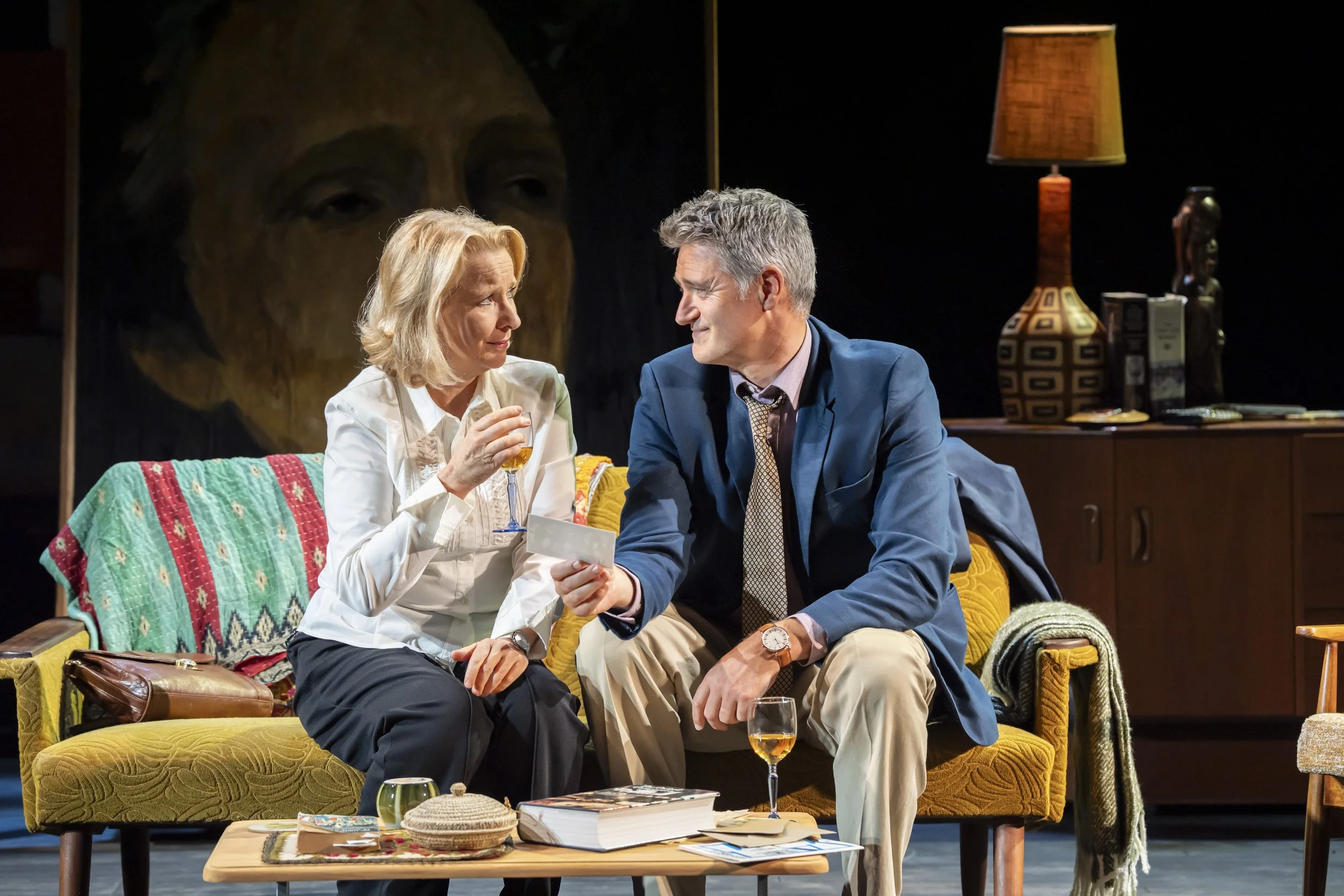
Inspector Morse is a character woven deeply into the fabric of British television history — a brooding, brilliant detective whose presence shaped decades of crime drama. Now, for the first time in a full-scale stage production, Morse steps out of the screen and onto the boards in House of Ghosts, a never-before-seen story written by original TV writer Alma Cullen.
Actor Tom Chambers, known for roles in Father Brown, Casualty, and a string of acclaimed stage musicals, takes on the mantle of the iconic detective. As the production prepares to arrive at the New Theatre, he speaks with us about the thrill of embodying a national treasure, the joy of live performance, and why audiences still can’t get enough of Morse.
Listen to the Full Interview at the Bottom of this Page
You’re bringing Inspector Morse to the New Theatre very soon. What was it like taking on such an iconic role?
Tom Chambers: When I first read the script, I thought, “Oh, I’ve done the detective thing before,” because I loved playing Inspector Sullivan in Father Brown. But when Anthony Banks, our director, told me he’d found a Morse story that had never been staged properly, I was intrigued.
This is the first full-scale stage production of Morse. There was a tiny version back in 2010, but this is completely revamped. I read it and thought, This is great. And of course, as soon as you close your eyes, you see John Thaw. He’s like a postage stamp in our national memory.
Did the legacy of John Thaw add pressure once you accepted the role?
Tom: Absolutely. At first, I was relaxed. Then I started telling friends and journalists, and everyone said, “Big shoes to fill.” That’s when the panic set in.
John Thaw and Morse are national treasures. People don’t want to see a Brad Pitt version of Morse. We’re not doing prosthetics or impersonations, but there has to be an essence — a flavour — of him. I can’t help being me, but I wanted to honour what people loved about Thaw’s performance without copying him.
This story has never been seen on screen. How have audiences reacted to something completely new?
Tom: They’ve been amazing. Alma Cullen wrote it as if you’re watching a live episode unfold on stage. It’s very clever — a play within a play.
At first, audiences think they’re watching something entirely different, and then Morse suddenly steps onto the stage like a member of the audience who’s had enough. It’s a brilliant contrast between the understated detective and the theatrical world he’s investigating.
And yes, the reactions have been fantastic. I can’t believe how much love there is for Morse.
Are there particular moments that audiences really respond to?
Tom: Oh, definitely. There’s a running theme about analogue versus digital. Morse hates the digital age — absolutely hates it — and those lines get huge laughs.
The play is written in short, TV‑style scenes, so the rhythm is familiar to fans. And while it’s a murder mystery, there’s humour threaded throughout, just like the original series.
The title House of Ghosts hints at something deeper. What can you tell us without giving too much away?
Tom: It’s a play on the old Playhouse Theatre — House, Playhouse, House of Ghosts — but really it’s about the ghosts of Morse’s past.
He’s watching a production involving people he knew at Oxford 25 years ago. He’s far too close to some of them, and technically he shouldn’t be working on the case. But, being Morse, he bends the rules.
You’ve worked extensively on stage and screen. What does theatre give you that television can’t?
Tom: Theatre is the gymnasium for an actor. You repeat the performance night after night, but you keep it fresh. You craft tiny details.
And the audience — they’re the conductor. If they react to something unexpectedly, you clock it. Maybe you lean into it the next night. It becomes this invisible game of tennis between you and them.
Does performing a murder mystery live make the audience’s reactions more unpredictable?
Tom: They often come in thinking it’s going to be very serious. And it is, at times. But there’s a lot of humour too.
At first, they’re not sure if they’re allowed to laugh. Then they realise they can. The director sometimes reminds us not to let the laughs take over — it’s still Morse, after all — but the light and shade is what makes it work.
You’ve performed in Cardiff before. Are you looking forward to returning?
Tom: I love Cardiff. I worked here on Casualty, and I’ve toured shows like Top Hat, Crazy for You, and Murder in the Dark.
I once asked a taxi driver what the best thing about Cardiff was. He said, “When you come back from holiday — the people.” And he was right. It’s a great place.
Why do you think theatre still matters so much today?
Tom: Because it brings people together. We’re all in a room with strangers, all reacting to the same thing at the same time.
When you laugh or squirm or roll your eyes, and you see someone next to you doing the same, you realise you’re not alone. In a world that feels increasingly isolated, that’s powerful.
And finally — what can Cardiff audiences expect from House of Ghosts?
Tom: A fresh Morse story, a lot of nostalgia, a few laughs, and a mystery that keeps you guessing. We’ve got a wonderful cast, and it’s a joy to perform. I can’t wait to bring it to the New Theatre.
Closing Thoughts
House of Ghosts offers something rare: a brand-new chapter in the Morse universe, crafted by those who helped define it. With Tom Chambers stepping into the role with warmth, respect, and a dash of Thaw’s unmistakable spirit, audiences can expect a production that honours the past while embracing the thrill of the unknown.
As the curtain rises at the New Theatre, Cardiff, one thing is certain — Morse is back, and he’s never been more intriguing.