Ffasiwn at National Museum Cardiff: A Powerful New Photography Exhibition Celebrating Working-Class Youth in the Welsh Valleys
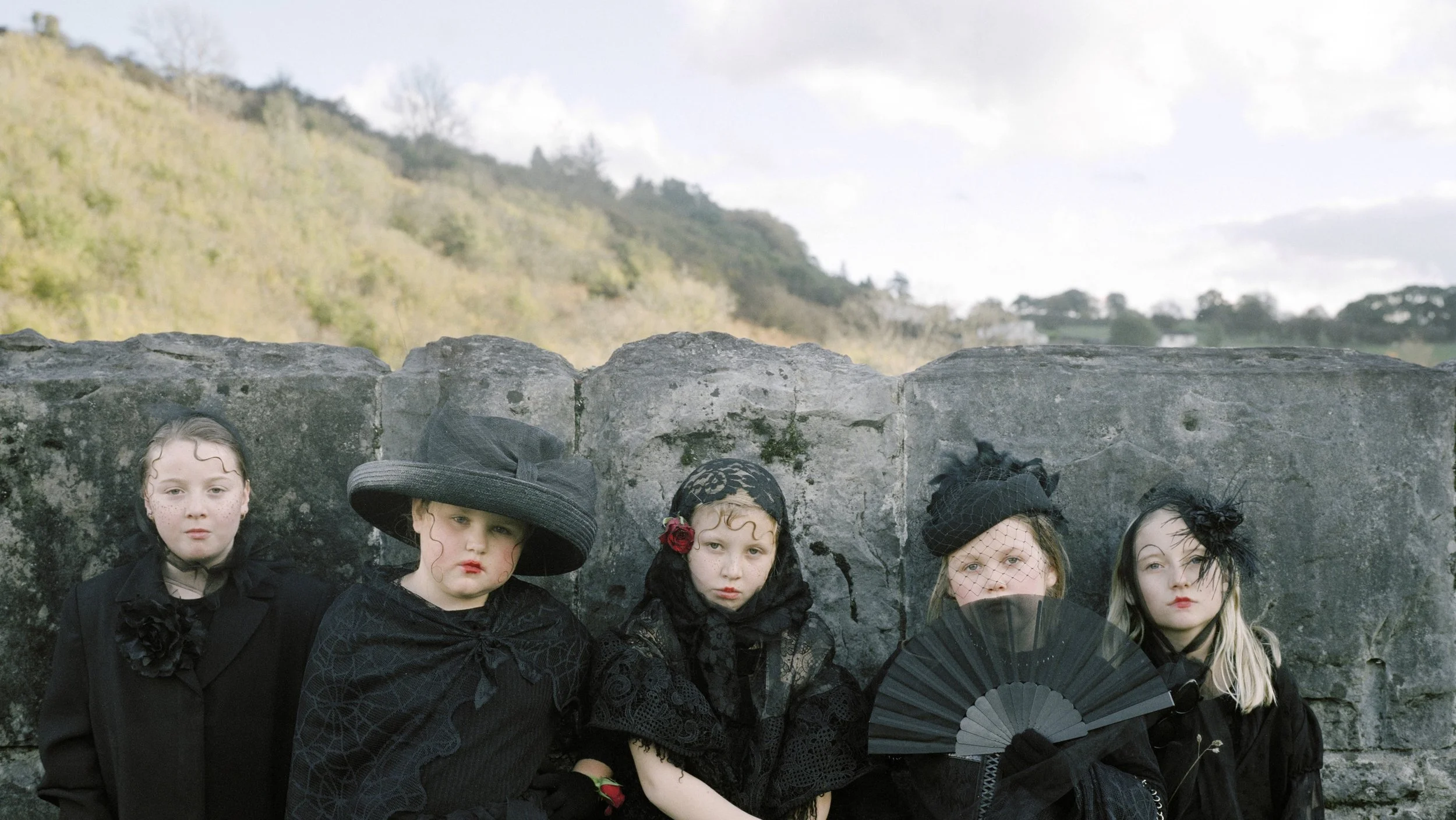
Ahead of its public opening, I was invited for an exclusive preview of Ffasiwn at National Museum Cardiff, a major new photography exhibition celebrating ten years of It’s Called Ffasiwn, the collaborative photographic project by artists Clémentine Schneidermann and Charlotte James.
The preview offered more than simply an early look at the work. We were guided through the exhibition by Bronwen Colquhoun, Senior Curator of Photography and curator of Ffasiwn, alongside Schneidermann and James themselves, who generously shared the story behind the project and answered questions as we moved through the gallery.
That sense of openness and collaboration of artists and audience in conversation felt entirely fitting for an exhibition built on shared authorship, trust and community.
More than a photography exhibition—it’s a portrait of belonging
At its heart, Ffasiwn marks a decade of work with a group of young people from the south Wales Valleys. But this is not documentary photography in the traditional sense.
There is no voyeurism here. No romanticised “look at the Valleys” narrative. No outsider’s gaze.
Instead, what Schneidermann and James have created is something far more powerful: a celebration of young people and the places that have shaped them, made with them—not simply about them.
That distinction matters.
As you move through the exhibition, what becomes immediately clear is the extraordinary sense of ownership the subjects have over these images. They are not passive participants. They are collaborators, image-makers, stylists, performers and storytellers in their own right.
The result is a rare and genuine feeling of belonging, something many exhibitions try to achieve, but few truly manage.
Watching both artists and subjects grow
One of the most moving aspects of Ffasiwn is its sense of evolution.
Spanning ten years, the exhibition unfolds almost like a visual coming-of-age story, not just for the young people pictured, but for the project itself.
You move through changing seasons, changing fashions, changing faces and changing landscapes. The work matures. The confidence deepens. The subjects visibly come into their own and so do the artists.
By the final image, what began as a photography project feels closer to an archive of shared lives and lived moments.
Working-class women at the centre
What makes Ffasiwn especially resonant is its grounding in working-class experience, particularly the lives and identities of working-class women.
This matters, because these communities are so often spoken about rather than spoken with.
Here, women and girls from the Valleys are centred not as symbols or stereotypes, but as fully realised individuals: stylish, funny, complex, vulnerable and proud.
There’s tenderness in that representation, but also strength.
It feels deeply Welsh, but never exclusive. Anyone who has grown up in a working-class community, whether in Merthyr, Manchester or Middlesbrough will recognise something familiar here.
The power of analogue photography
Shot entirely on film, the work carries a tactile intimacy that digital photography often struggles to replicate.
You can feel the presence of Clémentine Schneidermann behind the lens, the patience, the intention, the careful direction of the subjects.
Each frame is composed with remarkable balance and symmetry, yet never feels staged in a cold or detached way.
Instead, every image feels purposeful.
Even the colour palettes tell stories: pistachio greens, rich purples, deep blacks, chromatic markers of particular moments in time, subtly mapping the project’s progression across time.
These are photographs you don’t simply look at; you spend time with them.
A living archive of a changing Wales
Perhaps what struck me most was how urgently important this exhibition feels.
The Welsh Valleys are changing, socially, economically and physically. Some of the buildings captured in these photographs have already disappeared.
That makes Ffasiwn more than an exhibition.
It is a record. A cultural document. A piece of Welsh history preserved through intimacy rather than nostalgia.
And importantly, it preserves the people as much as the place.
A photobook worth supporting
For those wanting to take a piece of Ffasiwn home, Clémentine Schneidermann and Charlotte James are currently fundraising to turn the project into a photobook, with pre-orders now open and launching October 2026.
It feels like a natural next step.
Not simply a coffee-table book, but a lasting archive, one that would no doubt spark conversation in any home, while preserving these stories for future generations.
You can support the project and pre-order your copy here.
Why you should see Ffasiwn
In a cultural landscape increasingly dominated by spectacle, Ffasiwn offers something quieter but ultimately more powerful.
It is grounded in lived experience.
It values collaboration over extraction.
It honours creative freedom and shared ownership.
And perhaps most importantly, it allows working-class Welsh voices (particularly young women’s voices)to be seen on their own terms.
It is unlike any photography exhibition I’ve seen before.
And it deserves to be seen.
Ffasiwn opens at National Museum Cardiff on 23 May 2026 and runs until 4 April 2027.
For anyone interested in contemporary photography, Welsh culture, or simply the stories that shape who we are—this is essential viewing. You can find out more about Ffasiwn here