Earliest Known British Country Estate Landscape Could Remain in Public Hands
A rare seventeenth-century painting depicting Llannerch Park in Denbighshire has been temporarily barred from leaving the United Kingdom, following government intervention aimed at preserving one of the most significant surviving visual records of Welsh garden history.
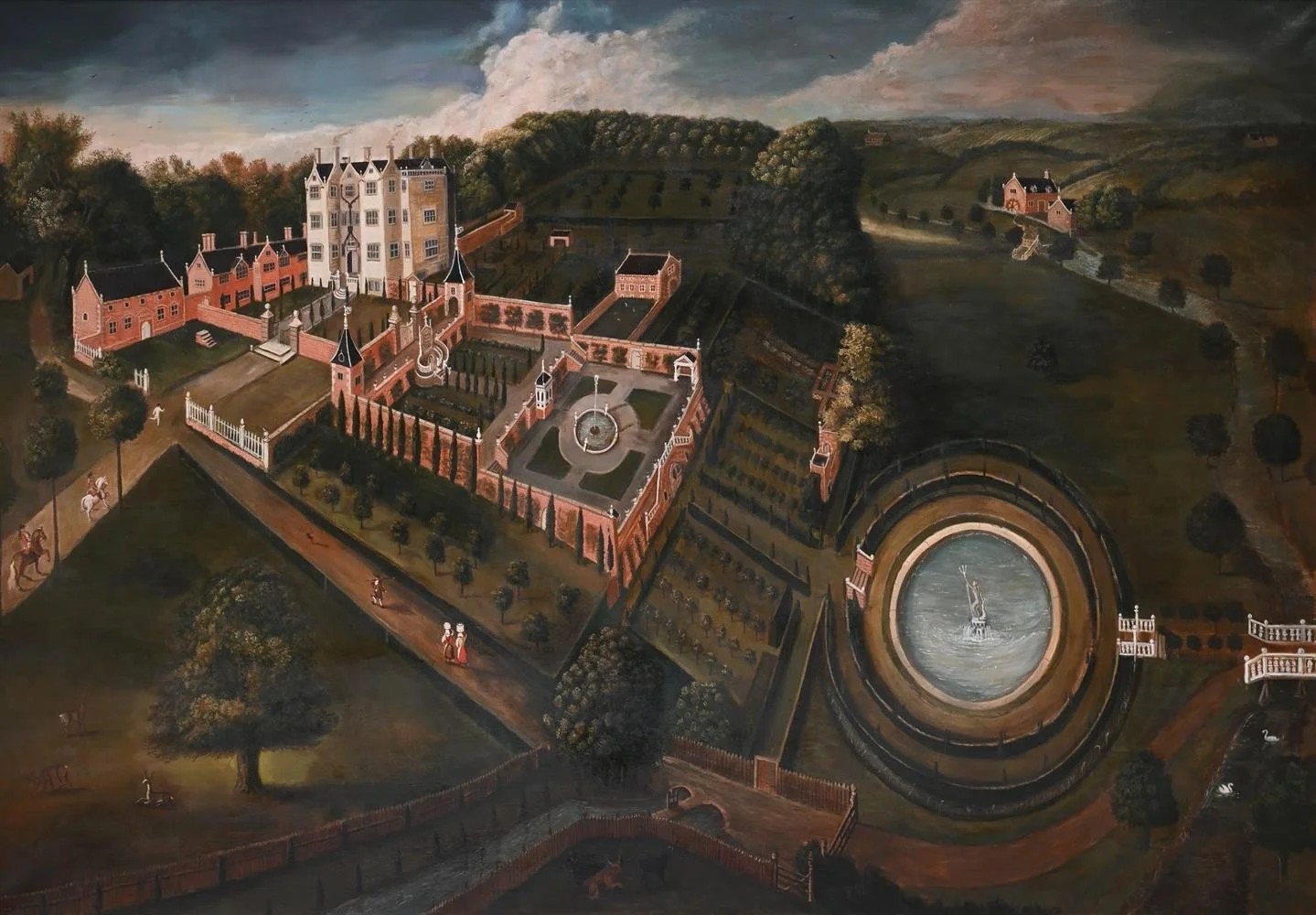
The work, completed in 1662, is believed to be the earliest known bird’s-eye view landscape painting of a British country estate. The UK Government has now placed a temporary export ban on the artwork, creating an opportunity for a UK museum, gallery, institution or philanthropist to acquire the painting and keep it accessible to the public.
The painting captures Llannerch Park, once regarded as one of Britain's most innovative gardens, and offers a remarkable glimpse into the emergence of landscape artistry, garden design and cultural exchange during the seventeenth century.
A Lost Welsh Garden Preserved on Canvas
Measuring more than two metres in width and executed in oil on canvas, the painting presents a detailed aerial view of the Llannerch estate, including its ambitious Italian-inspired gardens.
The estate's owner, Mutton Davies (1633-1684), is believed to have commissioned the gardens following travels through France and Italy. These journeys predated the widespread popularity of the Grand Tour by almost a century, making Llannerch one of the earliest examples of continental garden influences being introduced to Britain.
Historians believe the gardens featured striking Baroque elements including fountains, pools, sculpture, cascades, formal planting schemes and sophisticated hydraulic features. While the gardens themselves have long disappeared, the painting remains the only surviving visual record of what was once a groundbreaking Welsh landscape.
Its significance extends beyond Wales, providing evidence of how artistic and architectural ideas travelled between Britain and continental Europe during a transformative period in cultural history.
Government Steps In to Protect National Heritage
The decision to defer the painting's export licence follows recommendations from the Reviewing Committee on the Export of Works of Art and Objects of Cultural Interest (RCEWA).
The committee concluded that the work met two key Waverley criteria: its exceptional connection to British history and its outstanding importance for the study of garden history, landscape design and artistic development in seventeenth-century Britain.
Heritage Minister Baroness Twycross highlighted the importance of safeguarding the artwork for future generations.
She described country houses and their gardens as "iconic parts of the British landscape" and said the painting provides an extraordinary insight into the development of gardens and landscape artistry in Wales and across the United Kingdom.
According to the Minister, retaining the work in Britain would deliver substantial benefits for both public audiences and academic researchers.
A Unique Visual Record of Welsh History
Pippa Shirley, a member of the RCEWA committee, described the painting as the earliest known bird's-eye perspective of a country house in Britain and emphasised its importance as the sole surviving evidence of a remarkable Welsh garden.
She noted that the estate represented a radical departure from anything previously seen in Wales, featuring innovative water engineering, Baroque architectural influences and continental design principles introduced decades before such ideas became fashionable elsewhere in Britain.
With the physical garden entirely lost, Shirley argued that the painting's historical value has only increased, offering researchers an unparalleled opportunity to study early garden design, architecture, patronage and cultural exchange.
A Race to Secure the Painting for the Nation
The export licence decision has been deferred until 19 February 2027, allowing institutions and potential buyers time to assemble a purchase offer.
The painting has been valued at £550,000, plus VAT of £11,000. During the deferral period, expressions of interest are being sought from organisations or individuals willing to acquire the work and secure its future within the UK.
Should a successful acquisition take place, scholars will gain continued access to a rare visual document capable of shedding new light on the artistic, social and cultural connections linking Wales, England and continental Europe during the seventeenth century.
For Wales in particular, the painting represents far more than an artwork. It is a rare surviving window into a lost landscape that helped shape the evolution of British garden design and stands as a powerful reminder of the nation's deep contribution to cultural and artistic history.