A Nation Told Into Being: Story, Survival and Wales
I left the theatre last week after watching the beautifully told production ‘Stars and their constellations’ by the hugely talented storytellers Daniel Morden and Hugh Lupton with that familiar, difficult-to-name feeling: not quite nostalgia, not quite grief, but something that sits somewhere between the two. It stayed with me long after the lights came up. Listening to stories beneath a constructed night sky had stirred something older, something that felt less like memory and more like inheritance.
It made me think about Wales. About what it means to belong to a place where story is not simply entertainment or tradition, but structure. Foundation. Survival.
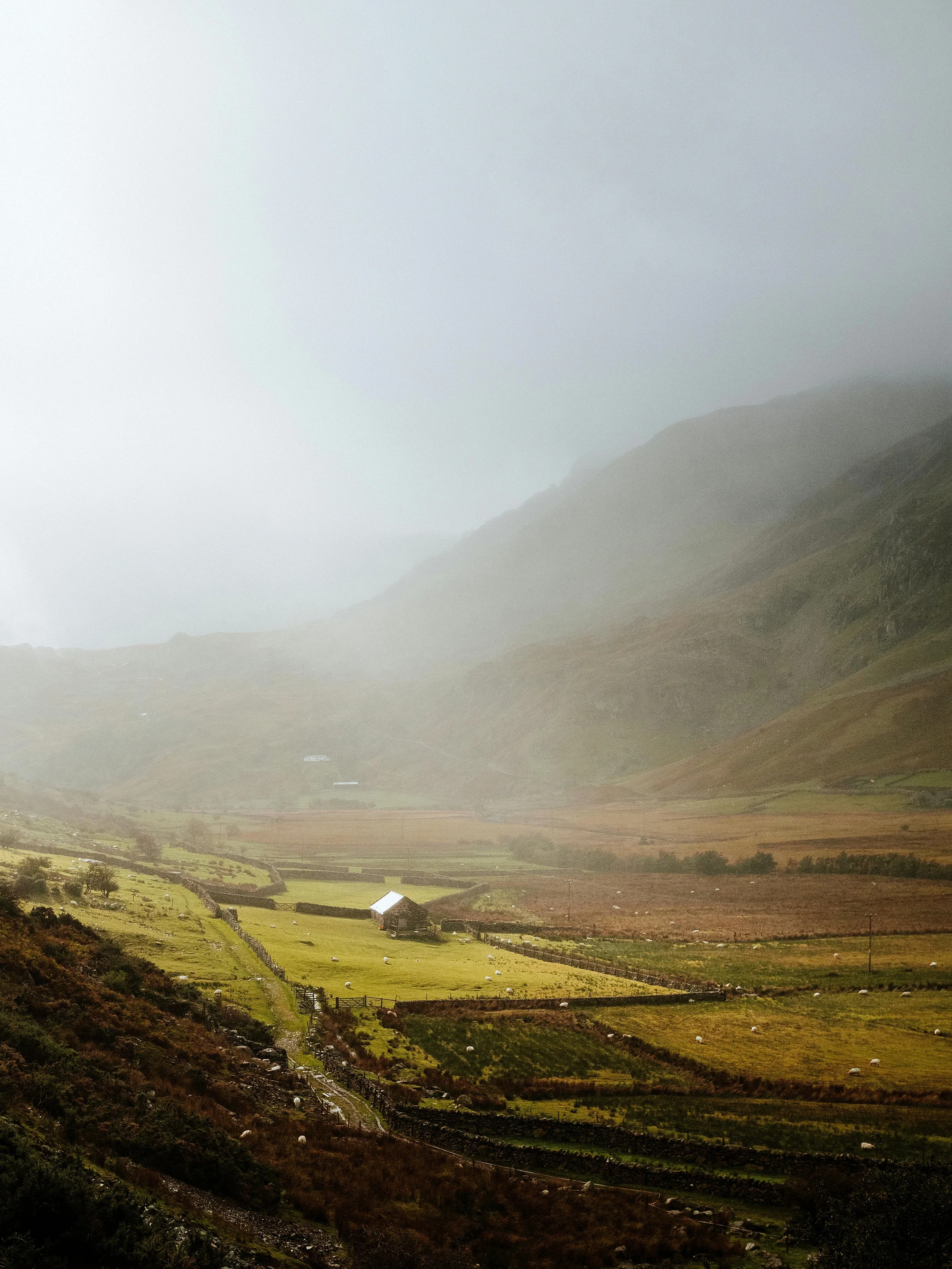
We are often told that Wales is ancient, that we are the “senior nation” of this island, that our lineage stretches back to the Celtic-speaking Britons who lived here long before the reshaping forces of invasion. But what does that actually mean in lived terms? It is easy to reduce that idea to pride, to a neat historical soundbite. I think it runs deeper than that. I think it lives in the way we tell stories, and more importantly, in the way we continue to need them.
Welsh storytelling has never been static. It was never meant to be preserved behind glass. The stories we inherit are fragments, reworkings, retellings shaped by voice and memory. The tales of the Mabinogi, for example, do not feel fixed. They feel porous. Rhiannon moves through them with quiet power, wronged and resilient. Bran carries the weight of protection and sacrifice. Cerridwen embodies transformation in its most unsettling form. These are not distant figures. They are unstable, shifting, difficult. They demand interpretation.
And yet, how many of us know them fully? Not as names, but as living narratives?
There is a strange tension in Welsh cultural memory. We speak often of loss, but less often about the mechanisms of that loss. Wales was not simply absorbed into England; it was conquered, legislated against, reshaped. Following the campaigns of Edward I, land was taken, systems imposed, and Welsh identity was actively restricted. The creation of English boroughs did not just reorganise geography. It controlled who could belong within it. Language, too, became a site of erasure. Welsh was suppressed, punished, made to feel lesser.
So what happens to a culture when its language is threatened?
It adapts. It translates. It survives in whatever form it can.
Our stories moved with us. They shifted into English when they had to, not as surrender, but as strategy. Even in translation, they carried something distinctly Welsh. A rhythm. A worldview. A refusal to disappear entirely. That persistence is not accidental. It is deliberate, even when it appears organic.
I sometimes wonder whether that is why storytelling feels so embedded in us. Not just because we have always told stories, but because we needed to. When formal structures failed us, when institutions worked against us, narrative became a form of continuity. A way of saying: we are still here.
That continuity does not only live in literature. It moves across forms. You can see it in poetry, in theatre, in visual art. You can also see it in things that are often dismissed as craft. Traditional Welsh tapestry blankets, for instance, are not usually discussed in the same breath as myth or literature, but they hold their own kind of narrative. The patterns, the repetition, the care in their making. They carry memory in a tactile way. Once a major industry, now in decline, their production has become something more fragile, more intentional. And yet, there is a renewed desire for them. A resurgence of interest that feels connected to a wider cultural questioning. What do we keep? What do we revive? What do we let go?
The same questions apply to our mythological past. The gods we once knew, or perhaps half-knew, are no longer central to our cultural consciousness. Arawn, ruler of the otherworld. Cerridwen with her cauldron of change. Bran, vast and watchful. Rhiannon, sovereign and misunderstood. Arianrhod, bound to the moon and to fate. They exist now in fragments, in academic texts, in occasional retellings. They have not disappeared, but they are no longer part of a shared, living belief system.
So where have they gone?
Or perhaps the better question is: where have they reappeared?
Because they do reappear, just not always in ways we immediately recognise. Contemporary literature draws on these deep-rooted traditions, often without explicitly naming them. You can see echoes of Welsh seasonal practices, for instance, in modern fantasy. The May Day celebration of Calan Mai, with its associations of renewal, threshold, and transformation, finds new life in reimagined spring festivals within the popular romantasy series A court of thrones and roses by Sarah j Maas. These adaptations are not always direct, but they carry the same emotional architecture. The same sense of crossing from one state into another.
Is that dilution, or is it evolution?
I am not sure there is a simple answer. There is always a risk that stories lose their specificity when they are absorbed into broader narratives. But there is also something powerful in their persistence. Even when detached from their original context, they continue to shape the way stories are told. They influence tone, theme, and structure in ways that are difficult to quantify but impossible to ignore.
Perhaps that is what Welsh storytelling really is. Not a fixed canon, but a way of seeing. A sensitivity to transformation, to landscape, to the unseen layers beneath ordinary experience. Our stories rarely offer clean resolutions. They resist simplicity. They ask more than they answer.
And maybe that is what we should be doing now.
What does it mean to inherit a culture that has survived colonisation, linguistic suppression, and industrial decline? What responsibilities come with that inheritance? Is it enough to preserve what remains, or do we have to actively reshape it for the present?
I do not think there is value in treating Welsh culture as something fragile and untouchable. That risks turning it into a relic. At the same time, there is a danger in losing sight of its origins, in allowing it to be absorbed without acknowledgement. The balance is difficult. It requires attention. It requires curiosity.
It requires us to keep telling the stories, even when we are not entirely sure what they mean.
Because that uncertainty is part of the tradition too.
We are still, all of us, sitting around the fire in one form or another. Still trying to make sense of who we are by looking both backward and upward. Still translating, adapting, remembering. Still asking the same quiet question that has always sat at the centre of Welsh storytelling:
What do we carry forward, and why?